
Lactate threshold test protocol: stages, blood sampling and recording
A lactate threshold test protocol has the athlete run or ride in stages of three to five minutes at rising speeds. A small blood sample from a finger or earlobe is taken at the end of each stage and read on a portable analyser, with heart rate noted. Stop when lactate is clearly rising or the athlete reaches exhaustion.
 Cibiraj Sathishkumar · Accredited Exercise and Sports Scientist, Founder of EvoQuest
Updated · 4 min read
Key takeaways
- Use stages of about three to five minutes with fixed speed steps, same warm-up and same surface or machine.
- Take a resting sample, then a finger-prick sample at the end of each stage after wiping away the first drop.
- Read samples on a calibrated analyser and record lactate, heart rate and perceived effort for each stage.
- Stop when lactate is clearly rising or the athlete reaches exhaustion.
- EvoQuest runs lactate tests in its Coimbatore lab and turns the curve into training zones.
On this page
Equipment and staff
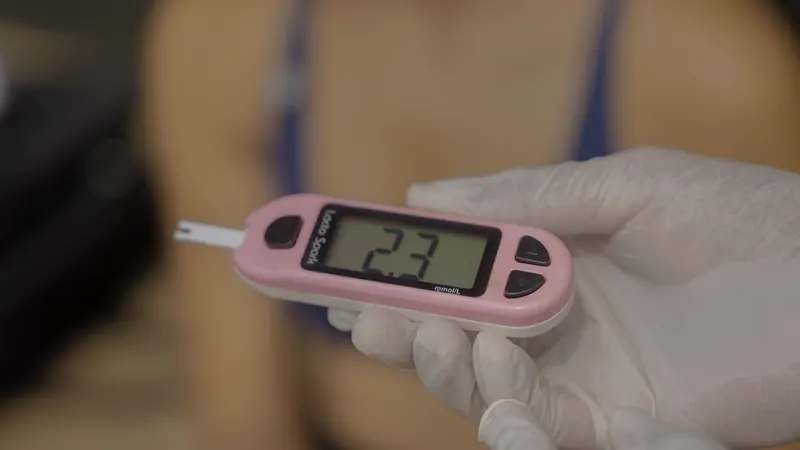
A lactate test needs a treadmill or a measured track, a portable lactate analyser and trained staff. Wear gloves and treat the work as a blood-handling task. Portable analysers vary in accuracy. Studies by Baldari and colleagues and Tanner and colleagues compared common portable devices. Pick a device with published validation and keep it for every test.
Read what to expect at a lactate threshold test for the athlete's view, and the lactate threshold test explained for the physiology.
Before the test
Ask the athlete to avoid hard training for 24 hours, eat a normal meal two to three hours before, and avoid caffeine and alcohol that day. Test at the same time of day each visit. Check for illness and injury. In Coimbatore's warm weather, keep the room cool and use a fan, and note room temperature.
Explain the plan: the speed will go up in steps, each stage lasts a few minutes, and a drop of blood will be taken at the end of each stage. Warm up for about 10 minutes at an easy pace, then take a resting sample.
- 1
Prepare equipment
Calibrate the analyser, check strips and set out gloves, lancets and a sharps bin.
- 2
Brief the athlete
Explain the stages and sampling, and confirm no illness or injury.
- 3
Warm up and rest sample
Warm up easily, then take a resting sample.
- 4
Run stage one
Start at an easy speed for three to five minutes.
- 5
Sample
Wipe the first drop, take the second and read lactate, heart rate and effort.
- 6
Raise the speed
Increase by the planned step and repeat the stage.
- 7
Stop and plot
Stop when lactate rises clearly or at exhaustion, then plot the curve.
Setting the stages
Pick a starting speed that is easy for the athlete, then raise it by a fixed step each stage. For a recreational runner this might be a start near 8 km/h with steps of 1 to 1.5 km/h. For a trained runner the start and steps are higher. The exact numbers depend on the athlete's level, so decide them before the test and write them on the sheet.
Taking the sample
Prepare the site before the stage ends. Clean the fingertip or earlobe with an alcohol swab and let it dry, since alcohol residue can alter the reading. Use the lancet at the side of the fingertip, wipe away the first drop with gauze, then touch the strip to the second drop and let it draw blood without squeezing hard. Squeezing can dilute the sample with tissue fluid.
The speed can pause or continue to the next stage while you sample. Whatever you choose, keep it the same each time. Write the reading straight away, then note heart rate and perceived effort. Dispose of lancets and strips safely.
Reading the curve
Plot lactate against speed and heart rate. The threshold is the point where lactate begins to rise more sharply. Different definitions exist. Some use a fixed value such as 4 mmol/L, and others use a rise above baseline or a curve-fitting method. Faude, Kindermann and Meyer reviewed these concepts and warned that results depend on the method and protocol. The PLoS ONE repeatability paper on lactate threshold concepts also shows that the repeatability differs between methods.
Choose one definition before the test and use it every time. Do not switch methods to get a flattering number. Our lactate threshold norms post lists reference ranges with their methods.
Common tester errors
Safety and consent
Blood sampling carries a small risk of infection or fainting. Use gloves, single-use lancets and a clean setting. Ask about bleeding disorders and fainting with blood. Do not test anyone who is ill or injured, or who has chest pain or an unexplained heart symptom. Young athletes need consent from a parent or guardian. If an athlete feels dizzy or unwell, stop the test and recommend a doctor.
Lactate testing at EvoQuest
EvoQuest runs lactate testing in the Coimbatore lab with a calibrated analyser, heart rate monitoring and a repeatable stage plan, then converts the curve into training zones for the athlete. We keep the method fixed so results can be compared across visits. If you want to learn whether lactate testing fits your sport, book a free 20-minute call at /book-a-call/.
Frequently asked questions
How long should each lactate threshold stage be?
Three to five minutes is typical, which gives lactate time to settle at each speed. Keep the same stage length at every test so curves can be compared.
How much should speed increase between stages?
Use a fixed step, often 1 to 1.5 km/h for many runners, but it depends on the athlete's level. Decide the plan before the test and write it down.
Where is the blood sample taken from?
Usually the fingertip or earlobe. Clean the site, let it dry, wipe away the first drop and sample the second. Avoid squeezing, which can dilute the sample.
How do I find the lactate threshold?
Plot lactate against speed. The threshold is where lactate starts to rise sharply. Several definitions exist, including fixed values and curve methods, so choose one and use it every time.
Are portable lactate analysers accurate?
Studies find that common portable analysers are reasonably accurate but differ between brands. Use one validated device with fresh strips, keep it for all tests and do not compare readings across devices.
This article is general education. Train within your current ability and get coaching if you are unsure about technique.
References
- Lactate threshold concepts: how valid are they? (Faude, Kindermann, Meyer, 2009) Sports Medicine
- Repeatability and predictive value of lactate threshold concepts in endurance sports PLoS ONE (PMC)
- Accuracy, reliability, linearity of Accutrend and Lactate Pro versus EBIO plus analyzer (Baldari et al.) European Journal of Applied Physiology
- Evaluation of three portable blood lactate analysers: Lactate Pro, Lactate Scout and Lactate Plus (Tanner et al.) European Journal of Applied Physiology
Cibiraj studied Exercise and Sports Science at Deakin University in Australia and worked as a strength and conditioning coach for cricket and football clubs in Melbourne before founding EvoQuest in Coimbatore. He runs the performance assessments and writes every diagnostics report, so the person who measures you is the one who explains the numbers.