
What to expect at a lactate threshold test
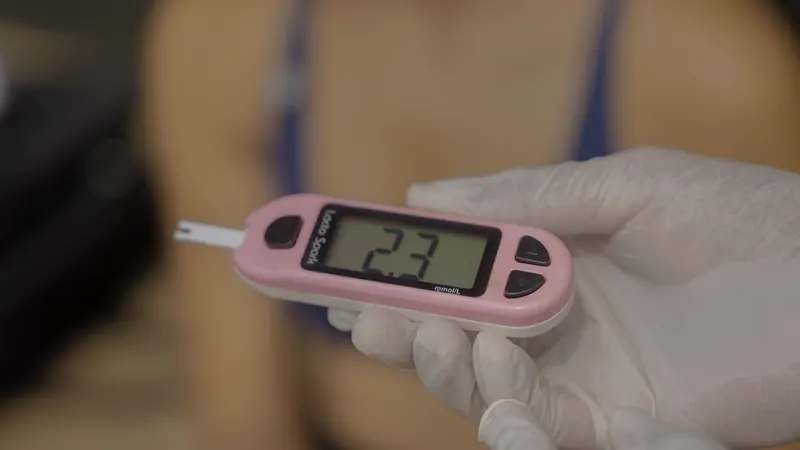
A lactate threshold test has you run or cycle in stages of a few minutes each, getting faster each stage, while a tester takes a tiny blood sample from a finger or ear at the end of each stage. The lactate curve shows where your effort changes from sustainable to hard, so training zones can be set.
 Cibiraj Sathishkumar · Accredited Exercise and Sports Scientist, Founder of EvoQuest
Updated · 5 min read
Key takeaways
- The test uses 4 to 8 stages of about 3 to 5 minutes, with a small blood sample at each.
- There are many lactate threshold methods; they give different numbers, so always use the same one.
- Results show training zones and fitness changes, even when VO2 max does not change.
- You do not have to go to exhaustion in every protocol; many stop at a set lactate or heart rate.
- Prepare as you would for a race: rested, fed and hydrated.
On this page
- What a lactate threshold test measures
- Why the method matters
- Preparation checklist
- What happens, step by step
- How results are used
- Who benefits most
- Limits and safety
- Lactate myths worth dropping
- Treadmill, track or bike?
- Example of how a curve is read
- Using the results in training
- Preparing mentally and what the effort feels like
- The EvoQuest lactate test
- FAQs
What a lactate threshold test measures
Lactate is produced in muscles all the time. At easy effort, the body clears it as fast as it is made. As effort rises, a point is reached where lactate starts to build up faster than it is cleared. That shift is the basis for lactate threshold concepts.
The test plots lactate against speed or power and finds marker points on the curve. Coaches use those points to set training zones. The test does not diagnose disease and does not replace medical advice.
Why the method matters
There is no single lactate threshold. Faude, Kindermann and Meyer reviewed the field and found around 25 different concepts, grouped into fixed lactate values, the first rise above baseline and maximal lactate steady state or curve-shape methods. The review found that most concepts correlate strongly with endurance performance, especially in running.
Heuberger and colleagues tested repeatability in cyclists and found that all evaluated concepts performed adequately, but some were more repeatable and better predictors than others. The practical lesson is simple: use the same method each time so your tests are comparable. Do not compare your number with someone else's from a different method.
Preparation checklist
If you wear a watch with heart rate, bring it. Compare its readings with the chest strap used in the lab.
What happens, step by step
- Warm-up and a resting lactate sample from a clean fingertip or earlobe.
- First stage at an easy speed or power for about 3 to 5 minutes, then a short pause for a sample.
- Each stage increases speed or power by a fixed amount.
- Heart rate and perceived effort are recorded each stage.
- The test ends when lactate passes a set value, when you reach a target effort or when you can no longer continue, depending on the protocol.
- Cool-down and a few more samples if recovery is being measured.
The pinprick is brief. Most athletes find the effort harder than the sample. Testers use fresh lancets and strips and follow hygiene rules.
How results are used
A report typically includes a lactate curve, the speed or power at selected lactate markers, heart rate at those markers and suggested training zones. For a runner, that might be the pace at which lactate begins to rise, the pace at a higher marker, and how those compare to the previous test.
Use the changes over time. A rightward shift in the curve (the same lactate at a faster pace) is usually a sign of improved endurance, even when VO2 max does not change. Look at the combined picture with VO2 max; see VO2 max testing for athletes.
Lactate is influenced by diet, recent training, heat and the test protocol. A single odd result is not a verdict. Repeat under similar conditions.
Who benefits most
Distance runners, cyclists, triathletes and swimmers use lactate testing to set pace. Team-sport players, such as footballers and hockey players, use aerobic and threshold data to plan conditioning between sprints. Combat athletes use it to manage fatigue across rounds.
Recreational runners preparing for events, such as marathon training plans that are rising in India, can use a test to avoid training too hard on easy days.
Limits and safety
Lactate testing is a performance tool. It does not tell you whether you have a medical condition. Anyone with chest pain, fainting, breathing difficulty or a heart or lung condition should see a doctor before maximal testing. Report illness or injury before the test.
For young athletes, testing should be supervised and focused on development, not ranking. See the youth athlete testing battery.
Lactate myths worth dropping
One myth is that lactate causes muscle soreness the next day. Delayed soreness comes from muscle damage and inflammation, not from lactate, which is cleared within an hour or so of finishing exercise. Another is that lactate is a waste product. Muscles and the heart can use it as fuel, which is one reason it is such a useful marker of metabolic response.
A third myth is that a higher lactate at the end of a test means a better athlete. What matters is the speed or power you reach at a given lactate and how that changes over time.
Treadmill, track or bike?
The best test matches your sport. Runners can test on a treadmill or a measured track, cyclists on a bike, swimmers in a pool, and team players with a shuttle or running protocol. A treadmill gives control over speed and gradient, while a track gives real-world pacing but depends on wind and surface.
Heat affects the numbers, so tell the tester about the room temperature and your recent training. Wear the shoes you train in.
Example of how a curve is read
The table is illustrative, not data from a real athlete. Your coach will explain where your own markers sit and what they mean for pacing.
Using the results in training
Zones from a lactate test typically separate easy aerobic running, steady tempo work and hard intervals. Most endurance programmes keep the majority of training in the easiest zone, with a smaller share near or above threshold. This is general exercise science, not an EvoQuest prescription.
Retest after a block of 8 to 12 weeks. If the curve shifts to the right, the same pace now costs less. If it does not, the coach checks volume, recovery, nutrition and the match between training and the goal. See how to improve VO2 max.
Preparing mentally and what the effort feels like
Early stages feel easy, like a normal warm-up. By the middle stages you are working, breathing deeper and feeling your legs. The last stages are hard, but many protocols stop before full exhaustion. You can ask for a stop at any time.
Treat the session like a race rehearsal. Sleep well the night before, eat what you normally eat before hard training, arrive early and avoid rushing. Tell the tester if you feel unwell, dizzy or in pain.
The EvoQuest lactate test
EvoQuest Sports Science in Coimbatore includes blood lactate profiling in its toolkit, alongside heart rate, GPS load, body composition, force plates and timing gates, within a three-hour performance assessment. Your coach explains the curve, the training zones and how they apply to your sport. We confirm which tests fit your goals on the free call. See performance diagnostics.
Book through the booking page or WhatsApp +91 93440 48834, or start with a free 20-minute call at book a call.
Frequently asked questions
What is a lactate threshold test?
It is a graded exercise test with blood samples at the end of each stage. The lactate curve shows where effort moves from sustainable to hard, which helps set training zones. There are many methods, so use the same one each time.
Does a lactate test hurt?
The finger or earlobe prick is brief and mild. Most athletes find the increasing effort more demanding than the samples. Testers use sterile lancets and clean technique.
How long does a lactate threshold test take?
The staged effort usually lasts 20 to 35 minutes, and the full session with set-up and debrief often takes about an hour. It depends on the protocol and the number of stages.
Is lactate threshold the same as VO2 max?
No. VO2 max is the ceiling of oxygen use, while lactate threshold relates to the highest steady intensity you can sustain. Athletes with similar VO2 max can have different thresholds and performance.
How often should I repeat a lactate test?
Many athletes retest every 8 to 12 weeks, or at the end of a training block. Use the same protocol and similar conditions so changes are meaningful.
Can I do a lactate test if I am a beginner?
Yes. Beginners often benefit because the test reveals how hard their easy days really are. The protocol is adjusted to your fitness. Anyone with symptoms or medical conditions should see a doctor first.
This article is general education. Train within your current ability and get coaching if you are unsure about technique.
References
- Lactate threshold concepts: how valid are they? (Faude, Kindermann, Meyer, 2009) Sports Medicine (PubMed)
- Repeatability and predictive value of lactate threshold concepts in endurance sports PLoS ONE (PMC)
- The oxygen uptake plateau: a critical review of the frequently misunderstood phenomenon (Niemeyer et al., 2021) Sports Medicine (PMC)
- Cardiorespiratory fitness as a quantitative predictor of all-cause mortality and cardiovascular events in healthy men and women: a meta-analysis (Kodama et al., 2009) JAMA
Cibiraj studied Exercise and Sports Science at Deakin University in Australia and worked as a strength and conditioning coach for cricket and football clubs in Melbourne before founding EvoQuest in Coimbatore. He runs the performance assessments and writes every diagnostics report, so the person who measures you is the one who explains the numbers.