
Lactate threshold test explained: how it works and how to read the result
A lactate threshold test has you run or cycle in stages of rising speed while a coach takes a small finger-prick blood sample at each stage. The point where lactate starts to rise sharply marks your threshold. That speed or heart rate helps set training zones for endurance work.
 Cibiraj Sathishkumar · Accredited Exercise and Sports Scientist, Founder of EvoQuest
Updated · 4 min read
Key takeaways
- Stages of 3 to 5 minutes at rising speed, with a blood sample at each stage.
- The threshold is where lactate begins to rise faster than workload.
- Several threshold definitions exist, so the method must be stated.
- Portable analysers have been compared with lab methods in several studies.
- The result sets training zones and tracks fitness changes.
On this page
What the test measures
Lactate is produced continuously during exercise and cleared by the body. At easy speeds, production and clearance match and blood lactate stays low. As speed rises, a point comes where lactate climbs faster than it can be cleared. That point is the lactate threshold.
It tells a coach the pace where the effort switches from comfortable to hard. See what lactate threshold training is for how athletes train around it. Note that lactate itself does not cause muscle soreness; our post explains why.
The protocol, step by step
- The athlete warms up and a resting sample is taken from the finger or earlobe.
- The athlete runs a stage of about 3 to 5 minutes at a set speed, for example on a treadmill.
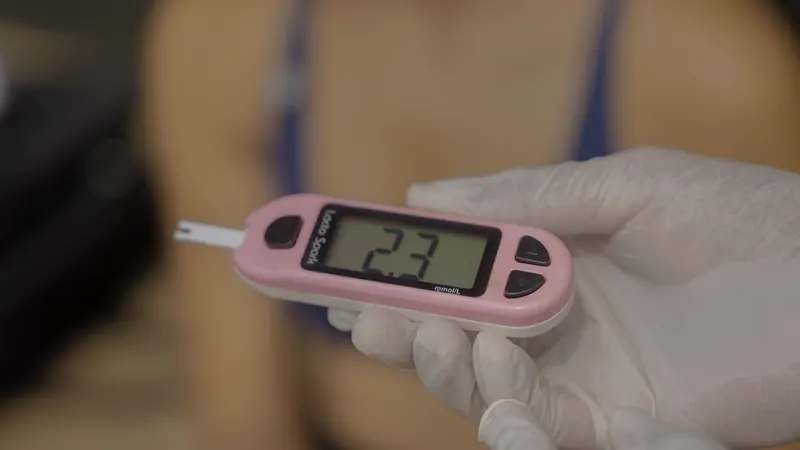
- At the end of the stage, a drop of blood is taken and lactate is read on a portable analyser, with heart rate recorded.
- Speed rises by a fixed step each stage, and sampling continues until lactate is clearly rising or the athlete reaches exhaustion.
- The coach plots lactate and heart rate against speed to find the threshold.
Our guide on what to expect at a lactate threshold test walks through the day from an athlete's side.
- 1
Take a resting sample
Take a baseline lactate sample and record resting heart rate.
- 2
Run the first stage
Run 3 to 5 minutes at a set easy speed.
- 3
Sample and step up
Take a blood sample and raise the speed by a fixed step.
- 4
Continue
Repeat until lactate rises clearly or the athlete reaches exhaustion.
- 5
Plot the curve
Plot lactate and heart rate against speed to find the threshold.
Threshold definitions
Faude, Kindermann and Meyer's 2009 review in Sports Medicine discusses how valid these threshold concepts are, noting that different methods give different answers. The method used should always be stated when comparing results.
Reading your result
The report usually shows a curve of lactate against speed, heart rate at each stage and the threshold speed and heart rate. Training zones are set around those points.
We do not give norm values. Threshold speed depends on the athlete, sport and test method, and a rise in threshold speed after training is the main sign of progress.
Reliability and equipment
A PLoS ONE paper examined the repeatability and predictive value of lactate threshold concepts in endurance sports, and found that results depend on the concept used. Portable analysers are common; Baldari and colleagues compared the accuracy, reliability and linearity of the Accutrend and Lactate Pro analysers against a laboratory analyser. See what lactate analysers are.
Standardise the previous day's food and training, the stage length and the sampling site. Heat and hydration also shift results.
Using the result in training
A coach can set easy, tempo and interval paces from the threshold. Retest after six to ten weeks to see if the threshold speed has moved. A rise at the same lactate means improved endurance fitness.
The test does not measure VO2 max, which needs a gas analyser; see VO2 max testing for athletes.
Preparing for the test
Arrive rested, with no hard training in the previous day, and eat a normal meal two to three hours earlier. Caffeine, dehydration and a poor night of sleep can shift the curve. Wear the shoes or use the bike set-up you will race in, and tell the tester about any medicines or illness.
Test on the same equipment each time. A treadmill and a track or a bike ergometer give different threshold speeds or powers, so a result from one does not carry over to the other. Hot Coimbatore afternoons can also change heart rate and lactate response, so a cooler time of day helps repeat tests match.
Turning the curve into training zones
The usual output is a set of zones anchored on the points where lactate first rises and where it climbs steeply. Easy aerobic work sits below the first rise. Tempo and threshold work sits between the two points, and intervals above the second point are hard and short. Heart rate at each point lets an athlete train by feel on the road without the lab.
Zones shift as fitness changes, so retest every eight to twelve weeks during a build. Recalculate zones after illness or a long break. Chest pain, dizziness or unusual breathlessness during a test means stop and see a doctor.
Lactate testing at EvoQuest
EvoQuest in Ramanathapuram, Coimbatore, includes lactate and heart rate in its lab assessment. The coach reads the curve with you and explains the zones in plain language. See the performance diagnostics page.
Book a free 20-minute call on the call page to ask whether the test suits your sport.
Frequently asked questions
What is a lactate threshold test?
It is a graded test where an athlete exercises in stages of rising speed while small blood samples are taken at each stage. The speed at which lactate starts to climb quickly marks the threshold used to set training zones.
Is a lactate threshold test painful?
It involves a small finger-prick or earlobe sample at the end of each stage. Most people feel only a brief sting. The later stages feel hard because the speed rises.
How long does a lactate threshold test take?
A typical test runs 30 to 45 minutes including warm-up and cool-down, depending on the number of stages. Each stage lasts about 3 to 5 minutes.
What is a good lactate threshold?
It depends on the sport, level and test method, so there is no single value. Track your own threshold speed and heart rate over time. A threshold at higher speed after training means improved endurance fitness.
How is lactate threshold different from VO2 max?
VO2 max is the highest rate of oxygen use, measured with a gas analyser. Lactate threshold is the pace where blood lactate starts to rise quickly. Both describe endurance fitness, and threshold often tracks performance better.
Does lactate cause muscle soreness?
No. Lactate is a fuel and a marker of exercise intensity. Next-day soreness comes from mechanical muscle stress, not from lactate left in the muscle.
Can I do a threshold test without a lab?
Field tests such as a 30-minute time trial or a critical speed test give estimates, but a blood sample test shows the individual curve more directly.
This article is general education. Train within your current ability and get coaching if you are unsure about technique.
References
- Lactate threshold concepts: how valid are they? (Faude, Kindermann, Meyer, 2009) Sports Medicine
- Repeatability and predictive value of lactate threshold concepts in endurance sports PLoS ONE (PMC)
- Accuracy, reliability, linearity of Accutrend and Lactate Pro versus EBIO plus analyzer (Baldari et al.) European Journal of Applied Physiology
Cibiraj studied Exercise and Sports Science at Deakin University in Australia and worked as a strength and conditioning coach for cricket and football clubs in Melbourne before founding EvoQuest in Coimbatore. He runs the performance assessments and writes every diagnostics report, so the person who measures you is the one who explains the numbers.