
How to train your child athlete while living abroad: a guide for NRI parents
To train a child athlete while living abroad, use the local club or school for sport practice, add a simple strength and movement plan supervised by a qualified coach, track growth and fitness every few months, and keep one consistent person in charge of the overall plan. Remote coaching can fill gaps the local setup leaves.
 Cibiraj Sathishkumar · Accredited Exercise and Sports Scientist, Founder of EvoQuest
Updated · 4 min read
Key takeaways
- Skill practice and match play can come from local clubs, while a remote coach can guide physical preparation.
- Youth strength training is safe and useful when supervised and well coached, according to international consensus.
- Track height and growth, because training needs change around the growth spurt.
- Time-zone differences are manageable with recorded video and scheduled check-ins.
- One person should own the plan, so school, club and home training do not pile up.
On this page
The challenge for families abroad
Families living in the UAE, UK, USA, Singapore, Australia or elsewhere often want their child to keep growing in a sport such as cricket, badminton, football or athletics, but the local setup may not match what they knew in India. Clubs may train once or twice a week, school sport may be seasonal, and nobody may be looking at the child's strength, speed or movement quality.
The result is a child who plays a lot but is not prepared physically, or who is doing too much across several teams with no one watching the total load. The fix is not to copy an adult programme. It is to build a simple plan around the child's age, growth stage and sport, and to decide who looks after each part.
Split the roles: club, school, coach, parent
A workable model gives each person one job. The club or school coach teaches the sport and runs matches. A physical-preparation coach, in person or remote, looks after strength, speed, movement and load. The parent keeps the calendar, sleep and food steady and watches how the child feels.
One person should hold the whole picture, so the strength plan does not clash with a tournament week.
What a child athlete should actually train
The 2014 international consensus statement on youth resistance training (Lloyd and colleagues, British Journal of Sports Medicine) concluded that resistance training is safe and effective for young people when it is competently supervised and appropriately progressed. The National Strength and Conditioning Association position on long-term athletic development takes a similar line: build broad movement skill and general strength first, and add sport-specific work as the child matures.
For most children aged about 9 to 14 that means:
- Fundamental movements: running, jumping, landing, changing direction and throwing with good technique.
- Bodyweight and light-load strength work: squat, lunge, push, pull and trunk control.
- Short, quality speed and jump work with plenty of rest.
- Mobility and a proper warm-up before every session.
Technique comes before load. Heavy lifting and maximal tests are not the goal at this stage. Our posts on strength training for kids and whether a 10-year-old can lift weights explain the details.
Pay attention to growth
Children grow at different times, and the fastest growth, often called peak height velocity, brings clumsier movement and a higher chance of overuse problems for some athletes. Girls usually reach it earlier than boys. A review on growth and maturation assessment in youth sport (Lundberg and colleagues, 2026) discusses the benefits and risks of assessing maturation to guide training.
A practical step for parents is to measure standing height every two to three months and note it with the date. A fast rise is a cue to reduce high-impact volume, watch for knee and heel pain, and focus on technique and mobility. Our post on why young athletes get injured during growth spurts goes deeper.
Any persistent pain should be checked by a doctor or physiotherapist where you live, not trained through.
Remote coaching that works across time zones
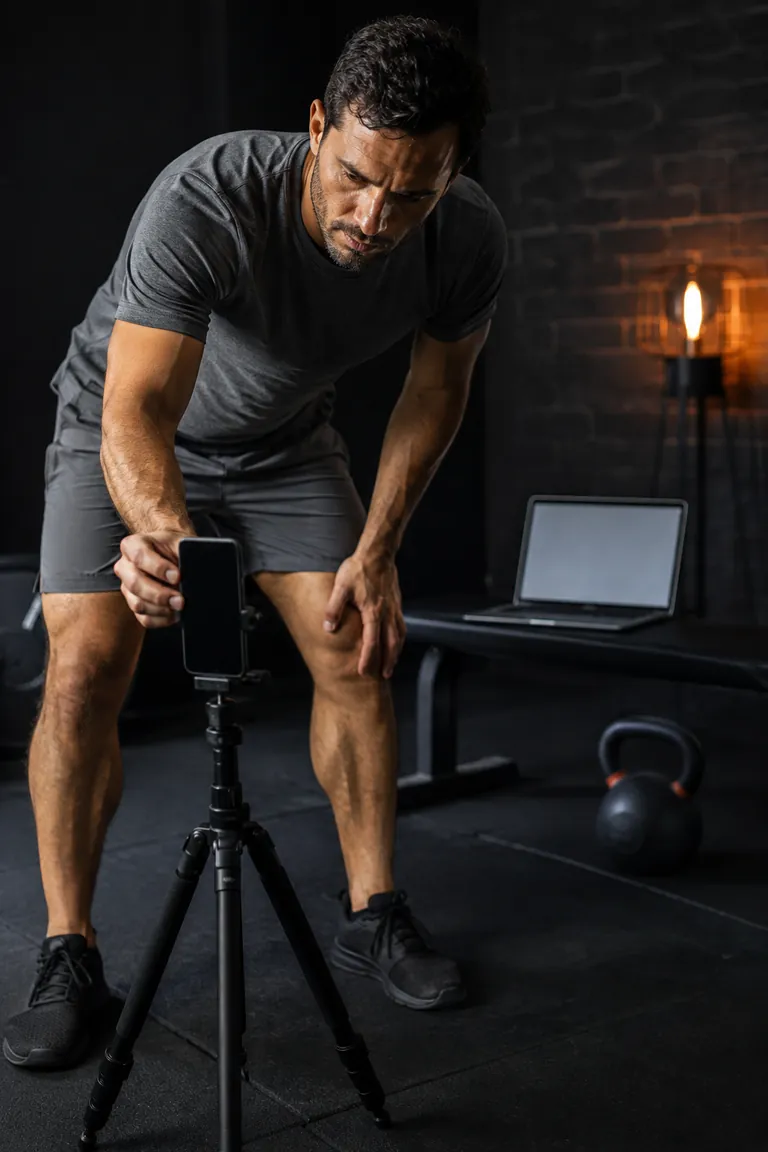
Remote coaching works well for physical preparation because most of the work is repeatable and easy to film. The coach writes the plan, the child films key lifts or jumps on a phone, and the coach reviews technique and adjusts the programme. Live video calls can be fixed to a time that suits both the family and the coach, and recorded feedback fills the gaps when time zones do not line up.
For best results the family needs a clear space, basic equipment such as bands, a light dumbbell or kettlebell, a skipping rope and a measuring tape, and a parent or older sibling to film. EvoQuest runs remote programmes for families outside India, and when you visit Tamil Nadu the child can complete a lab assessment to set a baseline, which the remote plan then builds on. Read what to expect from online sports science coaching before you decide.
Test, track and use visits home
A visit to India during school holidays is a good time to test. A lab assessment can measure jump power, sprint speed, strength, movement quality and body composition, giving a baseline that the remote coach and the local club can both use. The Khelo India fitness assessment is another reference many Indian families know.
Between visits, simple home checks work: a standing broad jump, a 10 m or 20 m sprint timed with a phone, push-up and plank quality, and height. Record them every two to three months under the same conditions. Our guide to tracking athlete progress shows how.
Judge the child against their own earlier results. Comparing with other children, or with local standards in a different country, is rarely helpful at this age.
Keep the load sensible
Children abroad often play for a school team, a club and an academy at once. Add strength training on top and the weekly load can climb quickly. The WHO 2020 guidelines recommend an average of at least 60 minutes of moderate-to-vigorous physical activity a day for children and adolescents, which sport already provides, so the aim of extra training is quality and preparation, not more hours.
Make sure the child has days off, sleep suited to their age, and a season with a break. If performance drops, mood changes, or the child loses interest, reduce load and talk to them. Our post on youth athlete development covers the long-term view.
Frequently asked questions
Can my child train with EvoQuest while living abroad?
Yes. EvoQuest offers remote programmes for athletes outside India. The coach writes the plan, reviews filmed technique and adjusts it over time. When the family visits India, the child can also complete a lab assessment in Coimbatore to set a baseline. Book the free 20-minute call to discuss your child's sport and age.
Is strength training safe for a child athlete?
Yes, when it is competently supervised, well coached and sensibly progressed. The 2014 international consensus on youth resistance training found it safe and effective for young people. Start with technique and bodyweight or light loads, and avoid maximal lifting until the child is physically mature.
How much equipment do we need at home?
Very little. Resistance bands, a light dumbbell or kettlebell, a skipping rope, a mat and a tape measure cover most plans for younger children. A phone to film technique is the most useful tool, because the coach can then correct movement from afar.
How do time zones affect remote coaching?
They matter less than people expect. Most programme work can be done any time and filmed for later review. Live check-ins can be set at a time that suits both sides, and recorded voice or video feedback covers gaps. The plan matters more than the call time.
How do I know if my child is doing too much?
Warning signs include a drop in performance, lingering tiredness, low mood, loss of interest, poor sleep and persistent aches. If you see these, reduce load, make sure there are rest days, and see a doctor or physiotherapist for any ongoing pain.
What should we test when we visit India?
A lab assessment can cover jump power, sprint speed, strength, movement quality, body composition and heart rate response. The result is a baseline for the remote coach and local club. Repeat it on the next visit to see how the child has changed over time.
This article is general education. Train within your current ability and get coaching if you are unsure about technique.
References
- Position statement on youth resistance training: the 2014 International Consensus British Journal of Sports Medicine, Lloyd et al., 2014
- National Strength and Conditioning Association position statement on long-term athletic development NSCA / Journal of Strength and Conditioning Research, 2016
- Growth and maturation assessment in youth sport: balancing benefits and risks Scandinavian Journal of Medicine & Science in Sports, Lundberg et al., 2026
- World Health Organization 2020 guidelines on physical activity and sedentary behaviour British Journal of Sports Medicine
Cibiraj studied Exercise and Sports Science at Deakin University in Australia and worked as a strength and conditioning coach for cricket and football clubs in Melbourne before founding EvoQuest in Coimbatore. He runs the performance assessments and writes every diagnostics report, so the person who measures you is the one who explains the numbers.