
Can a 10 year old lift weights? A parent's guide
Yes, a 10 year old can lift weights when a qualified coach supervises, technique comes first and loads stay light to moderate. The NSCA position statement and the 2014 international consensus support supervised youth resistance training. It does not stunt growth. Start with bodyweight, bands and light loads, and see a doctor if there is pain or a medical condition.
 Cibiraj Sathishkumar · Accredited Exercise and Sports Scientist, Founder of EvoQuest
Updated · 8 min read
Key takeaways
- Position statements from the NSCA and the 2014 international consensus support supervised youth resistance training.
- Age 10 is not a barrier; readiness is about following instructions, balance and technique.
- Start with bodyweight, bands and light loads, and learn movements before adding weight.
- Maximal lifts and unsupervised heavy lifting are not appropriate.
- A child with pain, injury or a health condition should see a doctor or physio first.
On this page
The short answer
A healthy 10 year old can take part in resistance training if it is designed and supervised by a qualified coach. That is the position of the National Strength and Conditioning Association, which published an updated youth resistance training statement in 2009, and of a 2014 international consensus statement in the British Journal of Sports Medicine.
Both documents describe a properly designed and supervised programme as relatively safe and useful for strength and motor skill. The Canadian Society for Exercise Physiology paper reached a similar view and said there is no minimum age for resistance training for children when instruction and exercise choice suit their stage.
That does not mean a child should copy an adult's gym session. It means they can do age-appropriate strength work, usually light and technique focused.
What lifting means at age 10
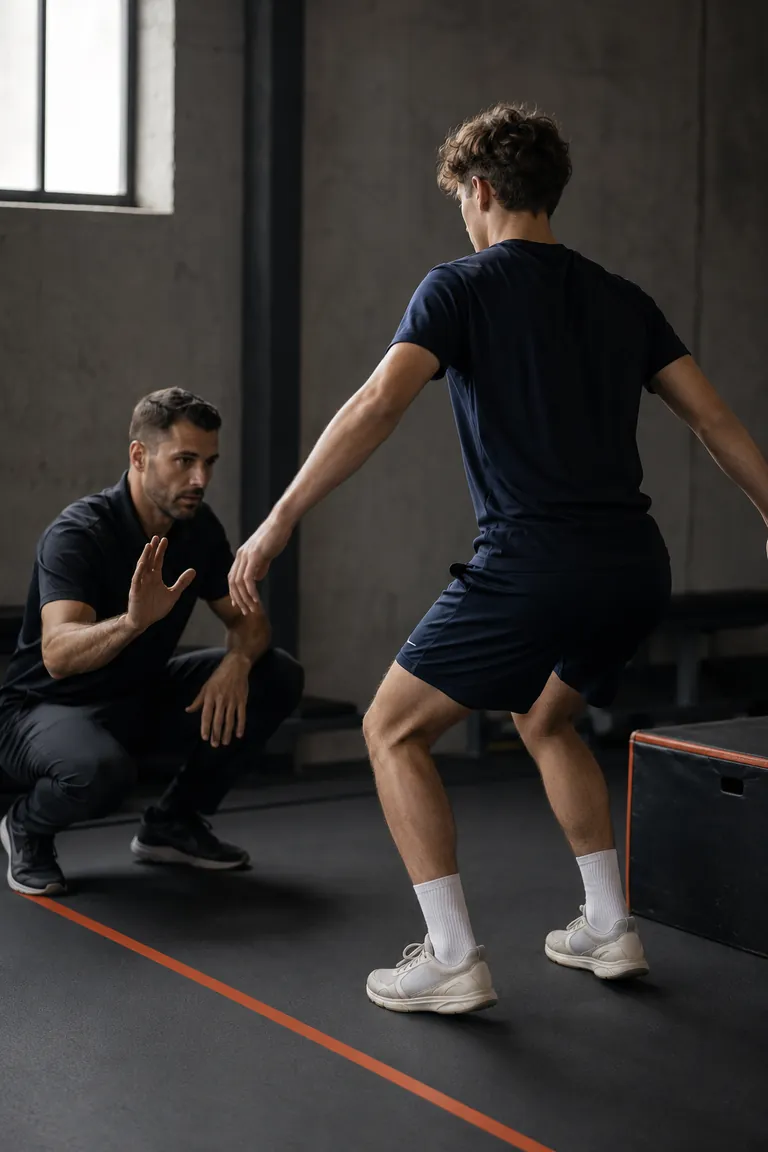
For a 10 year old, weight training is mostly learning to move well under light resistance. That includes bodyweight squats, lunges, push-ups, rows with a band or light dumbbell, medicine ball throws, planks and carries. A broomstick or empty light bar can be used to teach technique.
It is different from powerlifting, weightlifting competitions, or heavy one-repetition maximum testing. Those carry more risk and need strong readiness and expert coaching. Most 10 year olds do not need them.
It also sits alongside play. Climbing, running, jumping and throwing build the base that makes later strength work safer. The World Health Organization recommends an average of 60 minutes a day of moderate to vigorous physical activity for children and adolescents and regular muscle-strengthening activity, so structured strength work is part of an active week, not a substitute for play.
Parents sometimes picture weights as a straight line to bulky muscles. At ten, strength gains come mostly from the nervous system learning to recruit muscle better, not from big changes in muscle size. The Canadian position paper attributes children's strength increases mainly to neural adaptations. A child can become stronger, more coordinated and more confident without looking any different.
What the research says about safety
The NSCA statement concluded that a properly designed and supervised resistance training programme is relatively safe for youth. The 2014 consensus described the risk of injury in supervised youth programmes as no higher than in other sports and activities children do.
Many injuries reported in earlier years came from unsupervised lifting, bad technique, excessive loads or faulty equipment. That is why the guidance repeats the same themes: qualified supervision, appropriate equipment, gradual progression and attention to pain.
Safe does not mean risk-free. A child can still hurt a wrist dropping a dumbbell or strain a back by lifting beyond their control. You reduce those risks with coaching, not with a ban.
Equipment fit matters. Adult machines are built for adult limbs, and a child on the wrong machine can end up in a bad position. Free weights should be light and easy to hold, and the training area should be clear of clutter. A coach should demonstrate every exercise, correct form with short cues and stop the child if they lose control.
Warm-ups and cool-downs reduce injury risk and teach lifelong habits. Spend the first ten minutes on games and dynamic movement, not on static stretching.
Parents can check a few things themselves. Is the coach watching every set? Is equipment clean, in good repair and sized for children? Is the room supervised and free of heavy adult lifting going on beside the children? These observations tell you more than a certificate on the wall.
Will weights stunt my child's growth?
Position statements say that resistance training does not appear to harm growth or maturation when it is properly supervised. The old worry came from case reports of injuries in unsupervised or very heavy lifting, not from well-run programmes.
Children's growth plates, the areas of cartilage near the ends of long bones, are more vulnerable than adult bone to repeated heavy stress, which is why coaches avoid maximal loads and poor technique. A sensible programme with light to moderate loads is a different thing.
If your child has a diagnosed bone, joint, heart or other condition, talk to a doctor before starting. If they have pain around a joint or at a bone end, such as the heel or knee, see a doctor or physio rather than training through it.
Is my child ready? A readiness checklist
Age is only one factor. Look at whether your child can follow instructions for a few minutes, wants to take part, can balance on one leg for a few seconds and can hold a basic squat position without wobbling. Readiness also includes patience: a child who treats the gym like a playground may need more time.
Growth spurts change balance and coordination, so a child who was smooth last month may look awkward now. Adjust accordingly.
A short movement screen from a coach helps. Watching a child squat, lunge, hop and land shows whether they can keep their knees tracking over their feet and their trunk steady. If they cannot yet, spend a few weeks on those skills before adding any load. That time is never wasted, because the same patterns support running, jumping and throwing in every sport.
Also ask the child. A child who enjoys sessions will stick with them, and a child who dreads them will not. Keep the first sessions short and positive.
What a sensible starter programme looks like
Many youth guidelines suggest starting with one to two sets of around 6-15 repetitions with light to moderate loads, on non-consecutive days, and increasing gradually as technique improves. The Canadian position paper described a similar pattern. Treat these as general exercise-science ranges, not a prescription for your child.
- Warm-up: 8-10 minutes of games, skipping and dynamic movements.
- Main work: squat pattern, push, pull, hinge, and a trunk exercise, 1-2 sets of 8-12 reps.
- Skill work: jumping and landing games, with soft landings.
- Cool-down: easy walking and gentle stretching.
A session of 30-45 minutes is plenty. A coach should demonstrate, watch every set and stop the session if form breaks. When your child can do the load with good technique for the top of the rep range, the coach can add a small amount of weight or a harder variation.
Progression for a child is slower than for a teenager. A reasonable sequence is bodyweight patterns first, then bands and light dumbbells, then a light bar and finally a modest load, with each stage lasting as long as technique needs. Many ten-year-olds spend months in the first two stages, and that is normal.
Variety keeps children interested. Rotate exercises and include games like medicine-ball throws for distance, bear crawls and partner challenges. Praise effort and good technique rather than heavier weights.
What to avoid
Avoid unsupervised gym visits, maximal lifts, rushing to a barbell, training through pain and adult-style bodybuilding splits. Also avoid comparing your child to others. Children mature at different times, and a late developer is not behind.
Do not let a child treat lifting as punishment or a way to change body shape. The IOC consensus statement on youth athletic development stresses long-term, healthy development and warns against early specialisation and overload. Strength training should help your child enjoy sport more, not take its place.
Finally, avoid taking supplements. Most young athletes do not need them, and the safest approach is regular meals, enough sleep and water.
Be cautious of coaches who promise fast results, set weights to impress, or push children to compete in lifting. Youth lifting should be about skill and health. If a coach cannot explain how they would adapt a session for a child who is growing fast or has a sore knee, look elsewhere.
Also ask about your child's sleep, school load and other sport. Strength training adds stress. If your child already trains hard at cricket or football most days, the programme may need to reduce something else.
Strength training and sport at age 10 in India
In India, many children play cricket, football, badminton, kabaddi and athletics through school and academy programmes, often with heavy training loads in a hot climate. A short, well-run strength session can help them cope with that load, as long as it replaces nothing essential like sleep and free play.
Ask any gym or academy about the coach's qualifications and their experience with children. Ask who watches each set and how they adjust for age and growth. Our guide on how to choose a strength and conditioning coach lists good questions.
For deeper reading, is strength training safe for kids covers the evidence, and what is the best age to start strength training for kids looks at timing.
A practical point for Tamil Nadu: heat and humidity make long outdoor sessions tiring. Early morning or evening strength and skill sessions are easier on children, and water breaks should be frequent. School exam seasons are another sensible time to lighten the load.
Where EvoQuest fits
EvoQuest Sports Science in Coimbatore works with youth athletes from age 9. Assessments for young athletes look at movement quality, jump and landing, sprint speed and general strength, with force plates, timing gates and motion analysis, so the training that follows suits the child rather than a template. Youth work follows long-term athletic development principles and NSCA youth guidance.
If you are unsure whether your 10 year old is ready, the free 20-minute call is a simple first step. You can ask your questions about starting, safe loads and your child's sport, and we will tell you plainly whether a strength programme makes sense now.
Frequently asked questions
Is 10 too young to lift weights?
No. Position statements from the NSCA and the 2014 international consensus support supervised resistance training in children, and the Canadian position paper says there is no minimum age. Readiness depends on the child's ability to follow instructions and control movement, and on having a qualified coach.
Can a 10 year old use a barbell?
Yes, but start with an empty light bar or even a broomstick to learn technique. Add weight only when the child moves well for the full range of repetitions. Heavy barbell lifting and maximal attempts are not appropriate at this age, and a coach must watch every set.
Does lifting weights stunt a child's growth?
Current position statements say supervised resistance training does not appear to harm growth. Past concerns came from injuries in unsupervised, very heavy lifting. Using light to moderate loads, good technique and gradual progression keeps risk low. A child with pain at a growth area should see a doctor.
How many days a week can a child lift?
General youth guidance suggests two to three non-consecutive days a week for resistance work, alongside plenty of play and sport. How much suits a particular child depends on school, sport and sleep. A coach should start low and adjust based on how the child recovers.
What are the best exercises for a 10 year old?
Bodyweight squats, lunges, push-ups, band rows, planks, glute bridges, medicine ball throws and carries are good starters. Choose movements the child can control through the full range. Add small loads only after technique is solid, and include jumping and landing games for coordination.
When should a child stop a session?
Stop if there is sharp pain, dizziness, a loss of form, or the child seems very tired or upset. Ongoing pain around a joint, bone end or tendon should be checked by a doctor or physio before training resumes. Never push a child through pain to finish a set.
This article is general education. Train within your current ability and get coaching if you are unsure about technique.
References
- Youth resistance training: updated position statement paper from the National Strength and Conditioning Association Journal of Strength and Conditioning Research
- Position statement on youth resistance training: the 2014 International Consensus British Journal of Sports Medicine
- Canadian Society for Exercise Physiology position paper: resistance training in children and adolescents Applied Physiology, Nutrition, and Metabolism
- World Health Organization 2020 guidelines on physical activity and sedentary behaviour British Journal of Sports Medicine
- International Olympic Committee consensus statement on youth athletic development British Journal of Sports Medicine
Cibiraj studied Exercise and Sports Science at Deakin University in Australia and worked as a strength and conditioning coach for cricket and football clubs in Melbourne before founding EvoQuest in Coimbatore. He runs the performance assessments and writes every diagnostics report, so the person who measures you is the one who explains the numbers.