
Kettlebell swing muscles worked, from hike to float
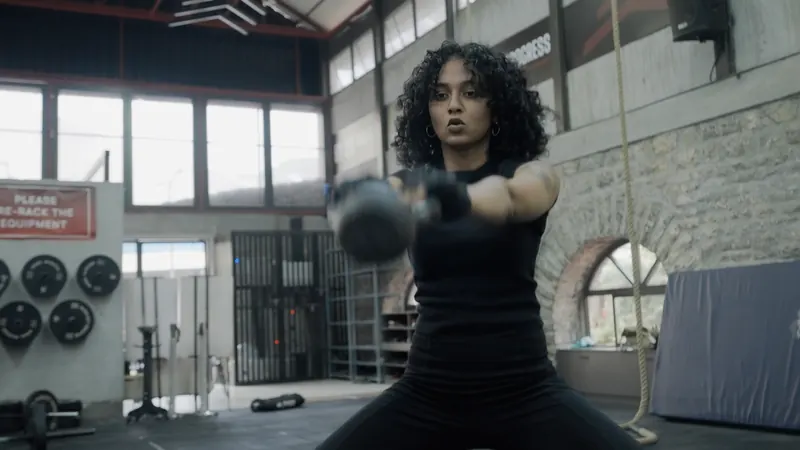
The kettlebell swing works the glutes and hamstrings as the main movers, with the spinal muscles, lats, abdominals and forearms holding the trunk and bell steady. The shoulders mostly guide the bell and do little lifting. Each phase of the swing loads a different part of the chain.
 Cibiraj Sathishkumar · Accredited Exercise and Sports Scientist, Founder of EvoQuest
Updated · 4 min read
Key takeaways
- Glutes and hamstrings generate the hip snap that moves the bell.
- The back muscles and abdominals hold the trunk rigid during the hike and the snap.
- Forearms and lats keep the bell attached to the body, so grip gets a real workout.
- Shoulders guide the bell and should not do the lifting.
- Bell weight, swing height and tempo shift effort across the chain.
On this page
The muscles, by job
A swing is a hip hinge performed at speed. The glutes extend the hips, the hamstrings help the hips extend and control the shin angle, and together they produce the snap. The adductors help the hips and keep the knees stable.
The spinal erectors resist the pull of the bell as it swings back between the legs, and the abdominals brace the trunk at the top. The lats keep the arms close to the body and stop the shoulders being dragged forward. Forearms squeeze the handle through the whole rep. For form cues, read how to do the kettlebell swing properly.
Muscles by phase of the swing
The swing has four moments: the hike back, the drive, the float and the drop. The load on each muscle changes through them.
Why it feels like grip and back work
Many people expect the arms to ache and are surprised that grip, lats and back tire first. The bell pulls away from the body at the bottom, and the forearms and lats work hard to resist it. In longer sets, grip is often the limit before the hips are tired.
If your lower back is the sore spot, the hinge is probably turning into a squat or the bell is being lifted with the arms. Push the hips back, keep a flat back and let the hips do the work. The common kettlebell swing mistakes post shows the usual causes.
How weight, height and tempo shift the work
A heavier bell raises demand on the glutes, hamstrings and grip at the bottom. A lighter bell swung faster trains speed. Swinging to chest height keeps the work in the hips, and swinging to overhead adds shoulder and trunk demand, with more risk for the shoulder and back if mobility is limited.
Tempo matters because the swing is a ballistic movement. A rep with a late, hard hip snap trains the hip muscles to contract quickly. A rep done slowly by the arms does little for the hips. For a one-armed swing, the trunk muscles have to work harder to resist rotation, and the obliques step up. See kettlebell swing variations.
The swing against the deadlift and the clean
A deadlift moves a heavy bar slowly from the floor, so it trains maximal force. A swing moves a lighter bell quickly through the hips, so it trains speed of hip extension. They load the same muscles with a different goal, and a strong athlete often does both.
A hang clean also trains fast hip extension, but it adds a catch and needs more skill. The swing is easier to learn and puts less strain on the wrists and shoulders. Our kettlebell swing vs hang clean post compares them.
Myths to drop
One myth says swings are an arm and shoulder exercise. The arms are connectors, and the hips supply the power. Another says swings work the abs the way crunches do; the abdominals brace, not flex. A third says swings replace deadlifts. They train speed at the hip, but the load is too low to build maximal strength, a point supported by research on strength and athletic performance in Sports Medicine.
Finally, many believe a sore lower back means working hard. In a swing, a sore lower back usually means the hinge slipped. Stop and film the next set from the side.
Sharp back pain or pain that spreads into the leg needs a doctor or physio.
Seeing the effect in the lab
Muscle recording belongs in a research lab. At EvoQuest in Coimbatore, we use simpler measures. Force plate jumps show whether the legs produce force faster, a handheld dynamometer tracks hip and hand-grip strength, and a velocity sensor shows how quickly the hips move a barbell at a fixed load. Together they show which link in the chain is the limit. See the diagnostics page, or book the free 20-minute call.
Frequently asked questions
What muscles does the kettlebell swing work most?
The glutes and hamstrings do most of the work, producing the hip snap. The spinal muscles, lats and abdominals stabilise the trunk, and the forearms hold the bell. The shoulders guide the bell and should not lift it. If the arms tire first, the swing is probably an arm lift.
Why does my lower back hurt after swings?
It usually means the hinge slipped into a squat or the back rounded under speed. Push the hips back, keep a flat back and use a lighter bell. Mild tiredness is normal; sharp pain is not, and a doctor or physio should look at it.
Do kettlebell swings work the abs?
They work the abdominals as braces, which stop the trunk from bending or arching at the top. They do not replace dedicated trunk exercises. One-arm swings add rotation resistance, so the obliques work harder.
Are swings good for grip strength?
Yes. The forearms hold the handle through the entire rep, and the bell pulls away at the bottom. Long sets often end with grip failure before the hips tire. Use chalk or lighter bells for longer sets, and train grip separately.
This article is general education. Train within your current ability and get coaching if you are unsure about technique.
References
- The importance of muscular strength in athletic performance Sports Medicine
- Training principles for power Strength and Conditioning Journal, 2012
- Strength training as superior, dose-dependent and safe prevention of acute and overuse sports injuries: a systematic review, qualitative analysis and meta-analysis British Journal of Sports Medicine, 2018
Cibiraj studied Exercise and Sports Science at Deakin University in Australia and worked as a strength and conditioning coach for cricket and football clubs in Melbourne before founding EvoQuest in Coimbatore. He runs the performance assessments and writes every diagnostics report, so the person who measures you is the one who explains the numbers.