
How to do goblet squat properly: Form Guide
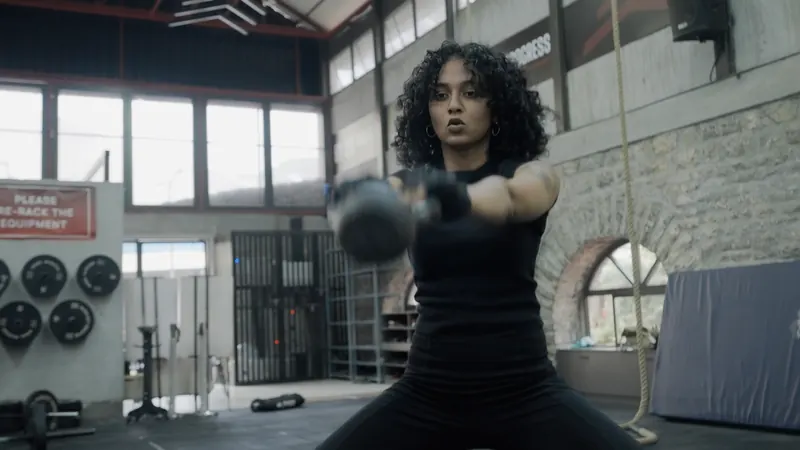
Hold a kettlebell or dumbbell at your chest, stand with feet shoulder width, and squat down between your knees keeping the chest tall. Go as deep as you can with your heels down, then stand. The front load helps you stay upright, so it teaches good squat form.
 Cibiraj Sathishkumar · Accredited Exercise and Sports Scientist, Founder of EvoQuest
Updated · 3 min read
Key takeaways
- Hold a kettlebell or dumbbell at your chest, stand with feet shoulder width, and squat down between your knees keeping the chest tall.
- Cue: Chest tall
- Cue: Elbows inside knees
- Most common mistake: Heels rising off the floor
On this page
Muscles the goblet squat works
| Muscle | Role in the goblet squat |
|---|---|
| quadriceps | Primary mover |
| gluteus maximus | Primary mover |
| core | Assists or stabilises |
| adductors | Assists or stabilises |
| upper back | Assists or stabilises |
Set-up
- Pick up a kettlebell by the horns, or hold a dumbbell vertically at the chest.
- Stand with feet shoulder width and toes slightly out.
- Elbows tucked in front.
How to do the goblet squat, step by step
- 1
Step 1
Brace the trunk and keep the chest tall.
- 2
Step 2
Break at hips and knees together.
- 3
Step 3
Lower between the knees.
- 4
Step 4
Reach the deepest position you can control.
- 5
Step 5
Keep the heels on the floor.
- 6
Step 6
Stand up by pushing the floor away.
Coaching cues that fix most reps
- Chest tall
- Elbows inside knees
- Heels down
- Spread the floor
Breathe in on the way down and out on the way up.
Common mistakes and fixes
| Mistake | Why it matters | Fix |
|---|---|---|
| Heels rising off the floor | Limited ankle mobility pushes the weight onto the toes. | Put small plates under the heels while you work on mobility. |
| Knees caving in | Weak hip control and a narrow stance let the knees drift. | Push the knees out over the toes. |
| Rounding forward at the bottom | The weight pulls the chest down and the back rounds. | Hold the weight tight to the chest and keep the chest up. |
| Cutting depth short | Less muscle work and less mobility gain. | Squat as low as is comfortable with a flat back. |
| Holding the weight away from the chest | It tips your balance forward and strains the arms. | Keep the weight tight to the chest. |
Make it easier or harder
| Level | Exercise |
|---|---|
| Easier | Box squat |
| Easier | Bodyweight squat |
| Easier | Squat with a rail |
| Target | goblet squat |
| Harder | Heavier goblet squat |
| Harder | Pause goblet squat |
| Harder | Front squat |
Sets and reps by goal
| Goal | Sets, reps or time |
|---|---|
| Beginner | 2-3 sets of 8-12 |
| Athlete | 3 sets of 8-12 at a challenging load |
| Strength or power focus | 3-4 sets of 5-8 heavier |
Goblet squats are easy to recover from. Two to three sessions a week suit most athletes.
How it carries over to sport
- Football: Basic leg strength supports sprints and challenges.
- Cricket: Fielding needs low, balanced positions.
- Kabaddi: Low stances and quick drives rely on strong legs.
- Badminton: Court movement uses repeated squat and lunge patterns.
Safety and who should modify it
Stop if you feel sharp knee or back pain. People with knee injuries should check with a doctor or physio. Youth athletes can learn the squat this way.
How EvoQuest measures it
EvoQuest can test squat depth with motion analysis and left-right balance with force plates.
In the assessment we film and measure this movement, compare left and right sides, and turn the result into the next block of training.
Frequently asked questions
Why is the goblet squat good for beginners?
The front weight acts as a counterbalance, so you can stay upright and sit deeper. It teaches depth, posture and bracing with little technique risk, and it works for almost every age and level.
How heavy should a goblet squat be?
Challenging for 8 to 12 reps with good form. Most beginners start with a light kettlebell or dumbbell. If your chest drops or heels lift, the weight is too heavy for now.
Goblet squat or back squat?
The goblet squat is a learning tool and a good leg exercise on its own. The back squat allows much heavier loads for strength. Many athletes learn on goblet squats and later add the bar.
How deep should I go?
As deep as you can while keeping heels down, chest tall and the back flat. If you cannot reach thigh parallel at first, use a box and lower it over time as your mobility improves.
This article is general education, not medical advice. If you have pain, a recent injury or a medical condition, see a doctor or physiotherapist before training.
Cibiraj studied Exercise and Sports Science at Deakin University in Australia and worked as a strength and conditioning coach for cricket and football clubs in Melbourne before founding EvoQuest in Coimbatore. He runs the performance assessments and writes every diagnostics report, so the person who measures you is the one who explains the numbers.