
What is the best age to specialise in one sport?
Major youth sport bodies advise delaying single-sport specialisation and keeping childhood broad, with varied sport and movement skills first. The IOC and NSCA both support wide development in the early years. Sports with an early peak, such as gymnastics, are often cited as exceptions, and the right moment depends on the child and the sport.
 Cibiraj Sathishkumar · Accredited Exercise and Sports Scientist, Founder of EvoQuest
Updated · 4 min read
Key takeaways
- Major bodies advise broad movement and several sports in childhood.
- Early specialisation can raise overuse injury and burnout risk.
- Some sports with early peaks may specialise sooner, with careful oversight.
- Growth stage, not just age, should guide decisions.
- EvoQuest works with athletes from age nine and keeps training varied.
On this page
What the major bodies say
The IOC consensus statement on youth athletic development and the NSCA position statement on long-term athletic development both favour a broad base of movement skills in childhood. They advise against narrow, intense single-sport training at young ages, pointing to higher risks of overuse injury, burnout and dropout.
The NSCA statement also notes that young people who build a base of fundamental movement and strength skills tend to cope better with later sport-specific load. Myer and colleagues, writing on when to start integrative neuromuscular training in youth, add that supervised conditioning can begin early, as long as it stays varied and fits the child's stage of growth.
Both frameworks treat athlete development as a long process. Becoming good at 25 does not require being exclusive at 10, and the evidence supports patience.
Why variety helps
Playing several sports builds a wider range of movement skills, such as running, throwing, jumping, balancing and catching. Those skills transfer to the eventual main sport. Variety also spreads load across different tissues, which matters for growing bodies.
Parents sometimes worry that a late start means falling behind. Selection decisions at young ages often favour children who are simply older or more mature than their classmates, a quirk that says little about long-term potential. Staying flexible keeps late developers in the game.
In India, school timetables often push children towards a single sport early because of coaching academies and selection pressure. Parents can still keep a second sport or free play in the week.
When specialising can make sense
Some sports have an early peak, and in these, earlier focus is common. Gymnastics, diving and swimming are often listed. Even there, qualified supervision, rest days and monitoring matter. Allen and Hopkins reviewed the age of peak competitive performance of elite athletes and found it differs by sport, which is a reminder that timing is sport-specific.
Signs to slow down
Warning signs include repeated pain in the same area, loss of enthusiasm, constant tiredness, a drop in school performance and frequent illness. These are signals to reduce load and talk to a coach, parent or doctor. Growth spurts bring added vulnerability, so training needs adjusting then.
A parent should ask whether the child is enjoying the sport and whether there is at least one full rest day each week. Our post on whether kids should specialise early covers the decision in more depth.
Youth development at EvoQuest
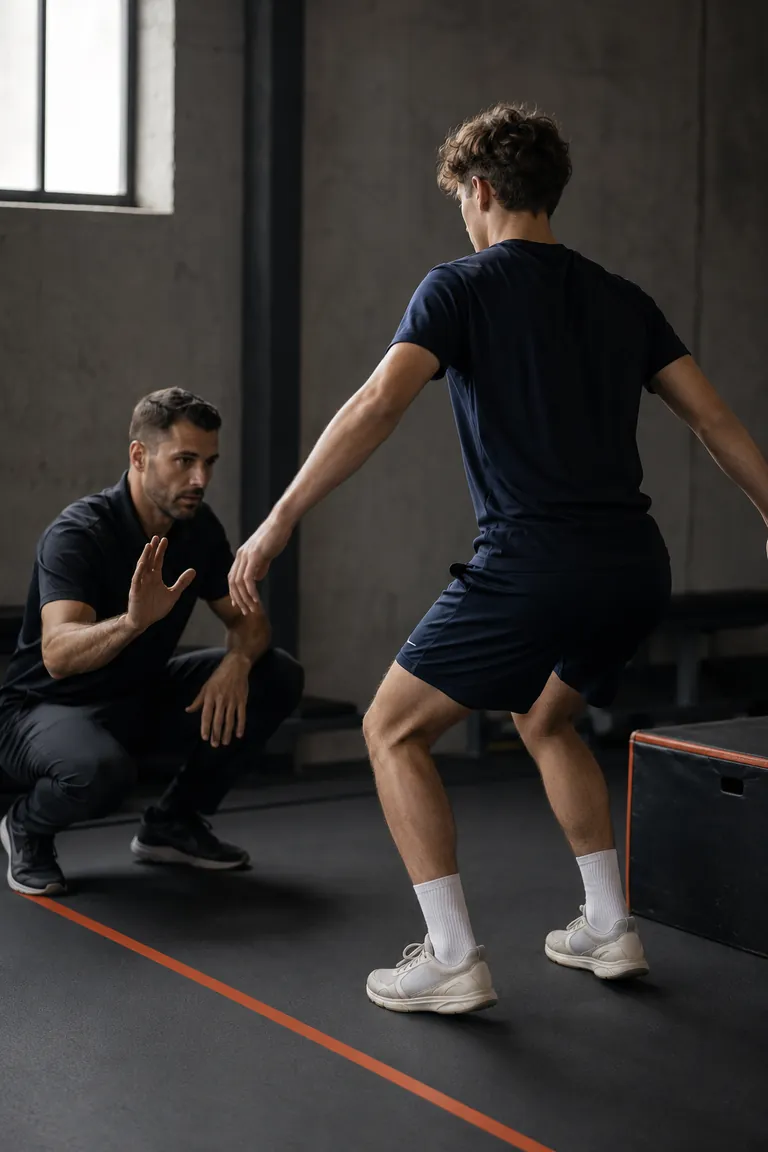
EvoQuest in Ramanathapuram, Coimbatore, works with athletes from age nine and builds young athletes' training around movement quality, strength basics and variety, following NSCA youth guidance. Testing gives parents a clearer view of how their child is developing, rather than a pressure to commit early.
Book a free 20-minute call to talk about your child's path.
Frequently asked questions
What age should a child specialise in one sport?
Major bodies advise delaying specialisation for most sports and giving childhood to variety and movement skill. They do not set one exact age. Sports with early peaks may differ, so decisions should reflect the child's growth stage, enjoyment and health, with advice from a qualified youth coach.
Does early specialisation increase injury risk?
Concerns include overuse injury and burnout, which is why the IOC and NSCA advise broad development. Risk depends on volume and recovery, so supervised training with rest days is safer than relentless single-sport load. Seek medical advice for pain that does not settle.
Which sports need early specialisation?
Sports with early peaks, such as gymnastics or diving, are the usual examples. Even in those, supervision and rest matter. Most team and racquet sports allow later specialisation without a penalty. Even then, ask whether the child enjoys the sport, keeps a full rest day each week and still plays freely with friends.
How can parents balance school and one sport?
Keep at least one full rest day, include a second activity or free play, and watch for tiredness or loss of enjoyment. A qualified coach can help plan load around exams. Seek medical advice if pain persists. Plan lighter training in exam weeks.
This article is general education, not medical advice. If you have pain, a recent injury or a medical condition, see a doctor or physiotherapist before training.
References
- International Olympic Committee consensus statement on youth athletic development British Journal of Sports Medicine
- National Strength and Conditioning Association position statement on long-term athletic development (Lloyd et al., 2016) Journal of Strength and Conditioning Research
- When to initiate integrative neuromuscular training to reduce sports-related injuries and enhance health in youth? (Myer et al., 2011) Current Sports Medicine Reports
- Age of peak competitive performance of elite athletes: a systematic review (Allen and Hopkins) Sports Medicine, 2015
Cibiraj studied Exercise and Sports Science at Deakin University in Australia and worked as a strength and conditioning coach for cricket and football clubs in Melbourne before founding EvoQuest in Coimbatore. He runs the performance assessments and writes every diagnostics report, so the person who measures you is the one who explains the numbers.