
Velocity based training explained: how measuring bar speed improves strength and power work
Velocity based training (VBT) uses sensors to measure how fast you move a barbell, then uses that speed to choose loads and decide when to stop a set. Faster bar speed means lighter relative load, and slowing speed signals fatigue. Coaches use it for objective feedback, readiness checks and individual load prescription.
 Cibiraj Sathishkumar · Accredited Exercise and Sports Scientist, Founder of EvoQuest
Updated · 8 min read
Key takeaways
- VBT measures the speed of the bar on every repetition and uses it to guide training.
- Bar speed falls as load rises and as fatigue builds, so it works as a live feedback signal.
- Velocity loss thresholds can end a set before fatigue ruins technique.
- Faster intent and real-time feedback help athletes train power as well as strength.
- A lab can build a personal load-velocity profile that fits your exercises and goals.
On this page
- What velocity based training is
- Why bar speed matters
- Traditional percentage training versus VBT
- How the sensors work
- Load-velocity profiles
- Velocity loss and stopping a set
- Training goals and bar speed
- A practical example
- Getting started with VBT
- Using VBT with youth athletes
- Worked example: a college sprinter's squat day
- Heat, sleep and bar speed
- Limits of VBT
- How EvoQuest uses VBT
- FAQs
What velocity based training is
Velocity based training is a method of resistance training in which the speed of the bar is measured and used to make training decisions. Instead of choosing a load as a percentage of your best lift and a fixed number of repetitions, you let bar speed show how hard a set really is.
A device attached to the barbell, or a camera system, records how quickly it moves in each repetition. The speed appears on a screen immediately, so the athlete gets feedback while the set is happening. A coach can then adjust the load or end the set based on what the numbers show.
Weakley and colleagues, writing in the NSCA Strength and Conditioning Journal, describe VBT as using velocity for objective feedback, for estimating strength, for building load-velocity profiles to prescribe loads and for monitoring changes in velocity over time. The approach has grown in elite sport and now appears in private performance labs, including EvoQuest in Coimbatore.
Why bar speed matters
Speed is a window into what the muscles and nervous system are doing. When you lift a heavy load, the bar moves slowly even if you push as hard as you can. When you lift a light load, it moves faster. The relationship between load and speed is steady enough that it can be used to guide training.
Bar speed also changes with fatigue. If you perform a set of squats with the same load, speed falls as the set goes on. A drop in speed across a set tells you how much fatigue has built up, often before the athlete feels it. Speed on the first repetition can also vary from day to day, which gives a readiness signal.
This is useful because strength and power depend on moving loads with intent. A set grinding at slow speed trains a different quality from a set moving fast. VBT lets you aim for the speed that fits your goal.
Traditional percentage training versus VBT
Traditional programmes use a percentage of a one-repetition maximum (1RM), such as 80 percent for five reps. This assumes your 1RM is fixed. In reality, strength changes with sleep, stress, illness, training and time of day.
Neither approach is perfect. Percentages are simple and require no equipment. VBT adds information and flexibility but also needs a sensor and some learning. Many coaches combine both.
How the sensors work
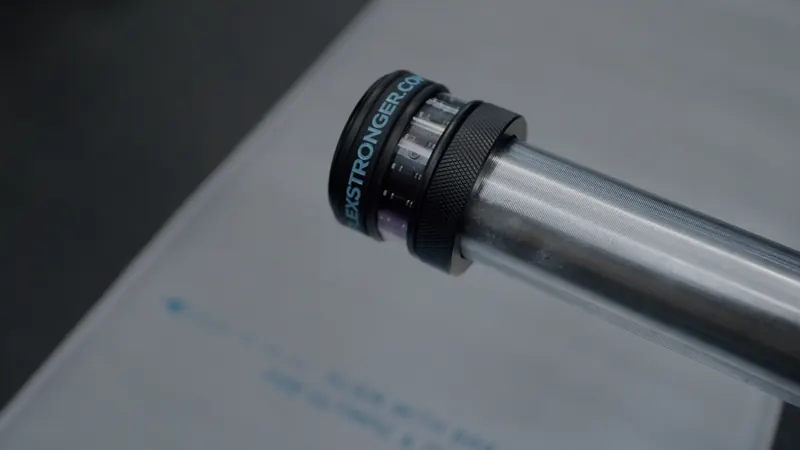
Several types of devices measure bar speed. Linear position transducers connect to the bar with a cable and record how far and how fast it travels. Accelerometer-based units clip onto the bar or the athlete. Camera and smartphone systems track the bar on video.
Accuracy varies. Weakley and colleagues discuss validity and reliability and caution that results depend on the device, the exercise and how it is used. For good data, attach the device the same way each time, use consistent technique and understand which velocity measure the device reports, such as mean velocity or peak velocity.
Mean velocity, the average speed over the upward phase of the lift, is common in strength training. Peak velocity is more often used for fast, ballistic movements. Always compare like with like.
Load-velocity profiles
A load-velocity profile maps how your bar speed changes as load increases, for a specific exercise. To build one, you lift several loads with maximum intent and record the speed for each.
Once the profile exists, you can estimate your 1RM from the speed of lighter lifts, which avoids a maximal attempt. You can also prescribe loads by speed: for example, aim for a certain speed in a squat when training for power, and a slower speed when training for maximal strength.
Profiles are specific to the exercise, the individual and the technique, and they can change with training. Retest regularly. A lab can build profiles for exercises like the squat, bench press and deadlift using bar sensors, and it can combine them with force plate data.
Velocity loss and stopping a set
Velocity loss is the drop in speed from the fastest repetition in a set to the last. Coaches use it to decide when to end a set. A small allowed loss means stopping early, leaving plenty in reserve, which suits speed and power work. A larger allowed loss means pushing closer to failure, which may suit muscle-building goals.
The method protects quality. If the goal is power, grinding the final repetitions with slow bar speed does not train fast movement. A set ended at the right time keeps every repetition fast.
Weakley and colleagues describe velocity loss thresholds as one way to manage set length and fatigue. The right threshold depends on the goal, the exercise and the athlete, so coaches usually test and adjust. Beginners should not use VBT as a reason to chase failure.
Training goals and bar speed
Different goals suit different speed zones. The table shows a general guide. Specific values depend on the exercise and the individual.
The principle is to aim to move every load as fast as possible, even when the bar moves slowly because it is heavy. That intent matters for adaptation.
Pairing VBT with jumps and sprints creates a bridge between the weight room and the field. See our guides on speed training and vertical jump for examples.
A practical example
Imagine an athlete doing back squats for power. The coach has built a load-velocity profile and set a target speed for the day. The athlete warms up, then lifts a moderate load with maximum intent. The sensor shows a speed slightly below the target on the first repetition.
That tells the coach that the athlete may be tired or under-recovered. Instead of pressing on with the planned load, the coach reduces the weight until the speed matches the target. On another day, the athlete might lift faster than expected, and the coach can add load.
During the set, the sensor tracks each repetition. When speed falls beyond the agreed limit, the coach ends the set. The athlete has done fewer repetitions than a fixed plan might require, but each was fast.
This example is an illustration of the method, not data from a specific athlete. The same logic applies to bench press, deadlifts and jump squats.
Getting started with VBT
If you want to try VBT, begin simply.
- Choose a sensor and learn what it reports, such as mean or peak velocity.
- Pick two or three key exercises and build a basic load-velocity profile.
- Lift every load with maximum intent, and keep technique the same.
- Record the speed of your best repetition each session and note trends.
- Use velocity loss to end sets once you are comfortable with the data.
- Review your data with a coach every few weeks.
Resist the urge to chase numbers. VBT helps the training, and the training is what makes you stronger and faster.
Using VBT with youth athletes
VBT can be used with young athletes, but the same safety principles apply. The NSCA position statement on youth resistance training and the 2014 international consensus emphasise supervision, technique and gradual progression.
In youth programmes, velocity feedback can motivate effort and highlight technique drift, because speed often drops when form breaks down. Loads should still be light and appropriate for the child's stage, and maximal testing is not needed. Estimating strength from sub-maximal velocity is a safer option.
Parents should look for coaches who treat the sensor as a tool for learning, not a scoreboard for ranking children. Read more in our guide on strength training for kids.
Worked example: a college sprinter's squat day
This is an illustration. A 19-year-old college sprinter has two squat sessions a week. The coach wants one session for strength and one for power.
On the strength day, the coach uses heavier loads and accepts slower bar speeds, with a small number of reps. On the power day, the coach picks a lighter load that moves faster, and ends each set as soon as speed drops beyond the agreed limit.
One morning, the first warm-up set is slower than usual. The sprinter reports poor sleep after exams. Instead of pushing through, the coach lowers the load and shortens the session. Two days later, speeds are back to normal, and the planned load returns.
The plan responds to the athlete's state without guesswork, which is the main practical value of VBT.
Heat, sleep and bar speed
Bar speed responds to things outside the gym. Poor sleep, a hot afternoon, a long journey and exam stress can all slow the first repetitions. That does not mean the athlete has lost strength. It means the nervous system is under pressure on that day.
Coaches in hot climates like Tamil Nadu often see slower speeds late in the day or after dehydration. Test and train at similar times, keep water close and use the day's speed as information, not as a verdict.
Limits of VBT
VBT is useful but not magic. It needs a good sensor, consistent technique and a coach who understands the data. Different devices can give slightly different readings, so do not mix them when tracking progress.
Fast bar speed alone does not make a good programme. You still need the right exercises, enough volume and recovery. Velocity data can also be affected by technique changes, bounce at the bottom of a lift or poor attachment of the sensor.
Do not chase numbers while form suffers. If an athlete changes technique to move the bar faster, the data may look better while the training gets worse.
How EvoQuest uses VBT
EvoQuest uses bar velocity sensors in the three-hour assessment in Ramanathapuram, Coimbatore. The coach records speeds on key lifts, checks how they change with load and compares them with jump and sprint data.
From this, the plan can be adjusted to your needs. A strong athlete who moves slowly may need more power work. A fast but weak athlete may need more strength. VBT is also available in training sessions, and some online coaching plans use video-based velocity tracking.
To learn more, see the testing and technology page or book a free 20-minute call through the call page or WhatsApp +91 93440 48834.
Frequently asked questions
What is velocity based training?
Velocity based training measures the speed of a barbell with a sensor and uses it to choose loads, give feedback and decide when to stop a set. It is based on the link between load, bar speed and fatigue.
Do I need a sensor for velocity based training?
A sensor gives accurate numbers, but the idea can be applied without one by lifting with fast intent and stopping when speed clearly drops. Sensors add precision, especially for tracking changes over time.
Is VBT better than percentage-based training?
It is not always better, but it adds useful information. VBT adjusts for daily readiness and fatigue, while percentages are simple and need no equipment. Many coaches use both, depending on the athlete and the goal.
What is velocity loss?
Velocity loss is the drop in bar speed from the fastest repetition to the last in a set. Coaches use thresholds to end sets before fatigue reduces quality, with smaller allowed losses for power work and larger ones for other goals.
Is VBT safe for teenagers?
Yes, when supervised and combined with appropriate loads and technique-first coaching. NSCA youth guidance applies. VBT can motivate effort and show technique changes, and strength can be estimated from lighter lifts instead of maximal attempts.
Which exercises suit VBT?
Barbell lifts such as squats, bench press, deadlifts and Olympic lift variations work well, as do jump squats and throws. Each exercise needs its own load-velocity profile, because speed patterns differ between lifts.
This article is general education. Train within your current ability and get coaching if you are unsure about technique.
References
- Velocity-based training: from theory to application (Weakley et al.) Strength and Conditioning Journal (NSCA)
- American College of Sports Medicine position stand: progression models in resistance training for healthy adults Medicine & Science in Sports & Exercise
- Position statement on youth resistance training: the 2014 International Consensus British Journal of Sports Medicine
- The countermovement jump to monitor neuromuscular status: a meta-analysis Journal of Science and Medicine in Sport
Cibiraj studied Exercise and Sports Science at Deakin University in Australia and worked as a strength and conditioning coach for cricket and football clubs in Melbourne before founding EvoQuest in Coimbatore. He runs the performance assessments and writes every diagnostics report, so the person who measures you is the one who explains the numbers.