
Thoracic spine mobility for beginners: why it feels stiff and where to start
The thoracic spine is the stretch of your back between the neck and the lower back, and it is built to move less than both. Beginners can start with three easy drills for two weeks, done slowly on a mat or a chair, staying inside comfortable range and stopping if anything hurts.
 Cibiraj Sathishkumar · Accredited Exercise and Sports Scientist, Founder of EvoQuest
Updated · 4 min read
Key takeaways
- The thoracic spine is attached to the ribs, so it moves less than the neck or lower back by design.
- Start with breathing, a seated rotation and a floor extension over a rolled towel.
- Keep each drill gentle for two weeks, then add a few repetitions.
- Stop on sharp pain, tingling or pain that travels into an arm, and ask a doctor or physio.
- Retest with the same simple check after two weeks to see whether anything changed.
On this page
Why the upper back feels stiff
The thoracic spine is the twelve vertebrae in the middle of your back. Each one carries a rib, and the ribs join the breastbone at the front, so the whole section behaves like a cage. A systematic review of studies in healthy adults found that rotation was the biggest standing movement in this region, with extension the smallest, which is why backward bending feels short here even in people with no problem at all.
Daily habits add to the tightness. Long hours at a laptop, a phone held low and a school bag worn on one shoulder all keep the upper back rounded. Stiffness from that is common and rarely a disease. It is a training problem you can usually work on, provided there is no pain that worries you.
What beginners should expect
Mobility changes slowly. A review of stretching research (Behm and colleagues) found that stretching raises range of motion in healthy active people, and the gains in your first weeks usually come from the body allowing more movement as much as from any real change in tissue. Expect a small difference in two weeks, not a transformation.
You will probably feel pulling, a mild stretch or a warm sensation. That is fine. Sharp pain, pins and needles or a dull ache that stays for hours is a signal to ease off. Do not force a position by leaning on a wall or a partner.
Three drills for week one
Keep the list short. Three drills are easier to remember than eight, and you are more likely to do them on a school or work day.
The towel should sit under the ribs, not the lower back. If your neck strains, support the head with a pillow or keep the arms crossed.
Week two: a little more
In the second week, add a few repetitions rather than extra drills. Move to six rotations per side and hold the towel position for 45 seconds. If the first week felt easy, add a side-lying open book, where the top arm sweeps across the chest and back while the knees stay stacked.
A good rule is that you should finish feeling looser, not sore. The review of thoracic exercise prescription in sport describes mobility work as a way to develop or maintain range of motion, so treat it as maintenance you repeat, not something to finish.
Common beginner mistakes
The first is pushing the lower back to make the movement look bigger. If your lower back arches while you bend backward, the thoracic spine has not moved. The second is holding the breath. Breathing out as you turn gives the ribs room to rotate.
The third is stretching only on the days you feel stiff. Short daily sessions beat one long session on the weekend. Adults who train, and school athletes especially, can fit these drills in before a warm-up. For safe youth training principles, see the long-term athletic development position statement from the NSCA.
How to check your progress
Pick one simple check and repeat it at the same time of day. A common option is the seated rotation: sit on a chair, cross your arms and turn as far as you can while your hips stay still. Note how far your breastbone points past your knee. Write it down, then check again at day 14. A review of measurement methods suggests that how you set up a measurement matters, so keep the chair, arm position and time of day identical.
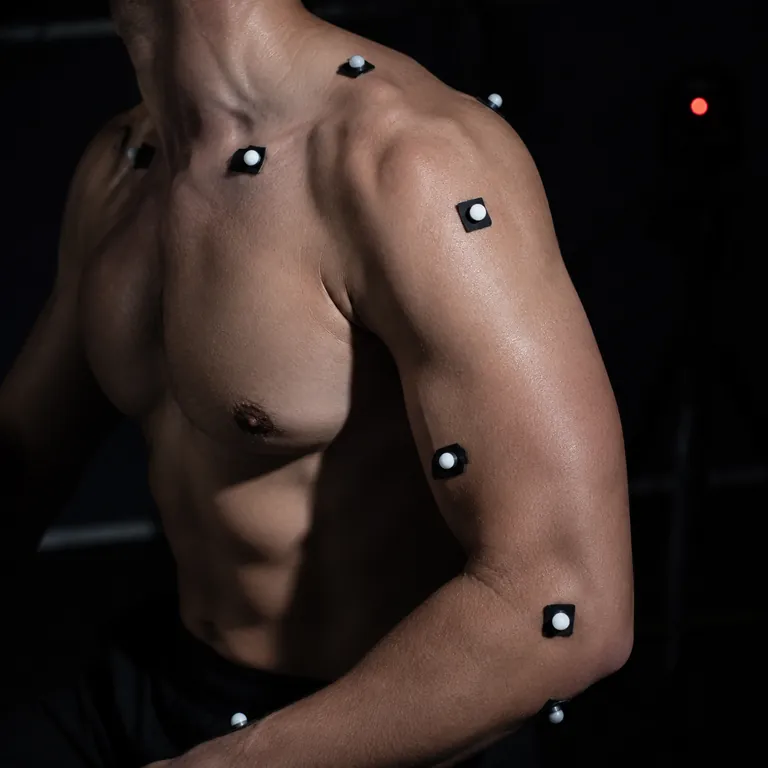
If you want a more detailed look at how your spine and shoulders move in a sport pattern, EvoQuest's motion analysis can film the movement and compare each side. For more drills, read thoracic spine mobility exercises.
Frequently asked questions
Is thoracic spine mobility safe for beginners?
Easy drills inside a comfortable range are safe for most healthy people. Skip them and see a doctor or physio first if you have had a spinal injury, recent surgery, numbness or pain that travels into an arm or leg. Stop any drill that causes sharp pain.
How often should a beginner do these drills?
Short sessions on most days suit beginners better than one long weekly session, because the body adapts to small, repeated exposure. Two to five minutes is enough in week one. Choose a time you will keep, such as before a warm-up or after homework.
Why do my shoulders feel tight when I rotate?
Your shoulder blades sit on the ribs, so a stiff upper back changes how the shoulders move. Some pulling around the shoulder blade is normal when you rotate. If the pulling is sharp or reaches into the arm, stop and get it checked.
Do I need a foam roller?
No. A rolled towel, a chair and a mat are enough for the first two weeks. A foam roller can help later, but it does not replace active movement, and a rolled towel is gentler for a beginner with a sensitive back.
This article is general education. Train within your current ability and get coaching if you are unsure about technique.
References
- Clinical reasoning framework for thoracic spine exercise prescription in sport: a systematic review and narrative synthesis PubMed Central
- The shape and mobility of the thoracic spine in asymptomatic adults: a systematic review of in vivo studies PubMed
- Acute effects of muscle stretching on physical performance, range of motion, and injury incidence in healthy active individuals: a systematic review (Behm et al.) Applied Physiology, Nutrition, and Metabolism, 2016
- Analysis of the active measurement systems of the thoracic range of movements of the spine: a systematic review and a meta-analysis PubMed Central
- National Strength and Conditioning Association position statement on long-term athletic development (Lloyd et al., 2016) Journal of Strength and Conditioning Research
Cibiraj studied Exercise and Sports Science at Deakin University in Australia and worked as a strength and conditioning coach for cricket and football clubs in Melbourne before founding EvoQuest in Coimbatore. He runs the performance assessments and writes every diagnostics report, so the person who measures you is the one who explains the numbers.