
Lower back pain in athletes: return to sport testing after clearance
Return to sport testing for lower back pain in athletes checks pain-free movement, trunk endurance, hip mobility and strength, and sport-specific loading such as lifting, rotating or running. It follows medical clearance, since back pain has many causes, and it focuses on how the whole chain from hips to trunk handles load.
 Cibiraj Sathishkumar · Accredited Exercise and Sports Scientist, Founder of EvoQuest
Updated · 4 min read
Key takeaways
- Back pain has many causes, so a doctor or physio must assess it first.
- Trunk endurance, hip mobility and lifting technique are common checks.
- No single test predicts a safe return, and core exercise evidence is mixed.
- Rotational and extension sports need sport-specific checks.
- EvoQuest tests only after clearance and does not diagnose back pain.
On this page
Why back pain needs careful testing
Lower back pain is common in athletes who lift, twist or run, including cricketers, fast bowlers, weightlifters, rowers and footballers. Causes range from muscle strain to joint, disc or bone stress problems, so the cause must be established by a doctor or physio before any sport testing starts.
After clearance, testing looks at how well the hips, trunk and legs share load. A back that is pain free at rest may still react to a heavy hinge, a rotation at speed or a long bowling spell. Our lower back pain prevention exercises post covers the training side.
What the evidence says
A systematic review by Stuber and colleagues looked at core stability exercises for low back pain in athletes and reported on how limited the evidence is, calling for better trials. Another review of core strengthening describes both benefits and drawbacks for athletes, depending on the exercise and the person. Neither provides a validated pass mark for return to sport.
The Bern consensus asks that return decisions weigh the athlete, the sport and the stage. So tests for back pain are used to see capacity and symptoms together, not to cross a single line.
The staged criteria table
Treat these as examples. Your physio decides which checks fit your sport.
Trunk endurance and strength tests
Endurance tests count how long the trunk muscles can hold a position. The front plank, side plank on each side and a back extension hold are common choices. The point is the pattern. A very short side plank on one side is more informative than a good front plank.
Strength tests such as a hinge with a light bar, a single-leg Romanian deadlift or a split squat add the hips and legs. Bar speed tracking shows whether the athlete loses control as the load rises. For general tracking see our post on force plate testing in sport.
Hip and movement checks
Stiff hips push extra movement into the lower back. Limited hip rotation is a known concern in rotational sports. Hip rotation and extension are checked with a goniometer or inclinometer, and the athlete is watched while hinging, squatting and lunging.
A force plate can show how evenly the athlete loads each leg in a squat and how they shift weight during a jump landing. A big side-to-side gap can mean the back is compensating for a weaker leg.
Common mistakes
Athletes often return when pain at rest is gone without testing it under sport loads. Others focus only on crunch-style core work and skip the hips. Some jump from no training to full volume, especially in bowling and rowing.
- Returning to heavy lifting before the hinge pattern is clean.
- Ignoring pain in the first hour after waking.
- Changing technique and volume together.
- Not telling the coach about nerve symptoms such as tingling or leg numbness.
What EvoQuest measures
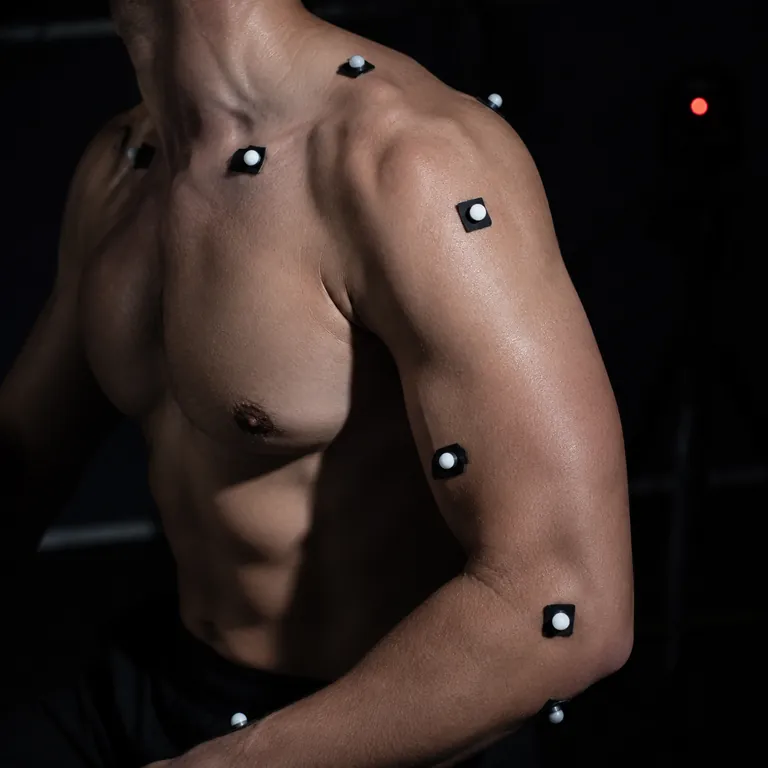
At EvoQuest in Ramanathapuram, Coimbatore, athletes who have been cleared can be tested with force plates for squats and jumps, bar-speed tracking for lifting, dynamometry for hip strength, motion analysis for hinge and landing patterns, and GPS for running load. Results show left-to-right gaps and change over time.
We do not diagnose back pain or prescribe treatment. We share clear data with you and your physio.
If you want to know whether lab testing suits your stage of recovery, book a free 20-minute call using the call page. You can also read how the performance diagnostics assessment is run.
Frequently asked questions
When can an athlete return after lower back pain?
It depends on the cause and the sport. A doctor or physio must clear the athlete first. After that, pain-free movement, trunk endurance, hip mobility and graded sport loading guide the return rather than a calendar date.
What tests are used for the trunk?
Common tests are front plank, side plank on each side and a back extension hold, scored by time. Large differences between sides and a sharp fall in hold time are the useful signals. They are tracked against the athlete's own earlier results.
Do core exercises prevent back pain?
Evidence is mixed. A systematic review in athletes called for better trials, and another review described pros and cons of core strengthening. Core work is still common, but it should be combined with hip mobility and overall strength.
Can I lift weights with back pain?
Only if your doctor or physio agrees. Light hinge and squat patterns are usually reintroduced first, and load rises only while pain stays settled. Sharp pain or leg symptoms mean stop and seek advice.
Why does my back hurt more in the morning?
Some back problems stiffen overnight, and some respond to the previous day's load. Record how you feel on waking after hard sessions and share it with your physio, as it helps judge whether a load was too high.
This article is general education, not medical advice. If you have pain, a recent injury or a medical condition, see a doctor or physiotherapist before training.
References
- Core stability exercises for low back pain in athletes: a systematic review of the literature (Stuber et al.) Clinical Journal of Sport Medicine
- Back problems: pros and cons of core strengthening exercises as a part of athlete training International Journal of Environmental Research and Public Health
- 2016 Consensus statement on return to sport from the First World Congress in Sports Physical Therapy, Bern British Journal of Sports Medicine
Cibiraj studied Exercise and Sports Science at Deakin University in Australia and worked as a strength and conditioning coach for cricket and football clubs in Melbourne before founding EvoQuest in Coimbatore. He runs the performance assessments and writes every diagnostics report, so the person who measures you is the one who explains the numbers.