
Kabaddi fitness training for 10 year olds: dodge, stop, fall and rise
A 10 year old kabaddi player is ready for more structured agility, balance and landing work, safe falling practice and light, supervised hand-touch games. Contact should still be introduced slowly and by size. Training stays playful, varied and low in load, because growth, school and heat already take a toll.
 Cibiraj Sathishkumar · Accredited Exercise and Sports Scientist, Founder of EvoQuest
Updated · 4 min read
Key takeaways
- Ten is a good age for structured footwork, dodging and stopping drills.
- Falling and rolling practice protects shoulders, wrists and the head in later contact.
- Ankle, knee and hip strength come from hopping, lunging and single-leg balance.
- Contact begins slowly, in size-matched pairs, with a coach nearby.
- Rest days and other sports remain part of a healthy week.
On this page
The step from 9 to 10
The main change from nine is focus. A 10 year old can follow multi-step instructions, so a raid-and-return drill with a signal makes sense. Reaction speed and coordination improve, so footwork patterns that were confusing a year earlier are now learnable. Strength is still modest, so the work remains light.
Biological age varies widely at this stage. The Lundberg review on growth and maturation in youth sport explains why same-age children can differ greatly in maturity. In a contact sport, that matters: a physically mature 10 year old can hurt a slower-growing partner without meaning to. Coaches should match partners by size, not just by class.
Class 5 timetables in India bring more homework and tuition, so energy for evening practice drops. A tired child moves less carefully and is more likely to roll an ankle.
Agility and stopping for raiders
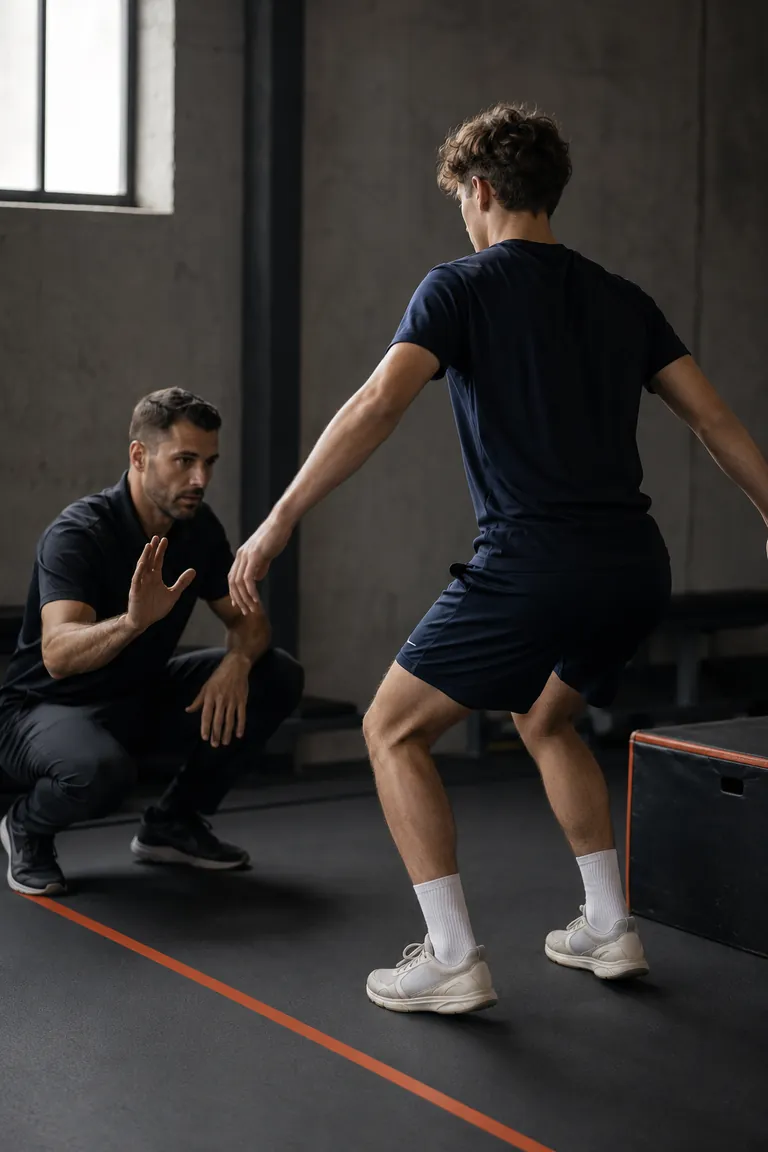
The kabaddi raider needs to attack, stop on a dime and escape. Teach those as three separate skills. For attacking, practise three quick steps to a cone and a touch. For stopping, drill a balanced stop with knees bent. For escaping, use a pivot on the ball of the foot and a step back.
The Aggarwala paper on Indian junior kabaddi players describes how raiders and defenders differ in physical profile, and a 10 year old can sample both roles. Rotating between them builds a rounded athlete and reduces the chance of repeated stress on the same joints.
Reading the opponent is part of the skill too. After each short round, ask the child what the defender did and what they would try next time. That builds decision-making without adding any physical load, and it keeps the session fun for children who are smaller or slower.
Safe falling and gentle contact
Falling practice moves from mat rolls to short sequences: reach, touch, step back, roll. Add a standing partner who offers light resistance with a hand on the shoulder, not a grab. The focus is awareness, not force.
Hand touch games with a defender who only has to stop the raider with a light two-hand touch to the waist work at this age. Count a successful tackle when the defender stays on their feet. Avoid ankle holds and dives at the legs, which are the typical way knees and ankles get hurt.
Introduce each new contact step only after the previous one is clean for a full session. A simple ladder is mat rolls, reach-and-retreat, light hand touch, partner resistance on the shoulder, and then a waist-level tackle in pairs matched by size and weight. Stop the ladder if a child shows fear or repeated falls.
The kabaddi premier league injury study and the kabaddi literature review list the knee, ankle, shoulder and fingers as common problem areas. Those are the same joints this stage of practice protects.
Strength and balance without weights
Bodyweight routines of 10 minutes twice in a week are enough. Include squats to a bench, step-ups, single-leg balance, a bridge and plank on knees. The NSCA guidance supports well-coached, low-load work at this age and treats technique as the main target.
For ankle and knee stability, hop on one leg and hold the landing for three seconds. If one side looks shaky, add a few extra reps on that side. Do not turn it into a competition between children.
Flexibility needs light work as well. After practice, hold a seated forward fold, a butterfly stretch for the hips and a calf stretch against a wall for 20 seconds each. Kabaddi positions ask for deep squats and wide stances, and a child who can sit comfortably in a squat is better placed to move well.
Sample week for a 10 year old
- Two kabaddi sessions with games, footwork drills and rolling practice
- One match or practice with light contact only, size-matched
- One 10 minute strength and balance routine
- One other sport or free play
- Two rest days
This is generic guidance and not an EvoQuest prescription. Reduce the plan during exams and heat waves.
EvoQuest Sports Science for young kabaddi players
EvoQuest can check a child's squat, hop, landing and single-leg balance and share findings with families in plain language. This helps spot early imbalances before contact starts. The free 20-minute call is an easy first step.
Frequently asked questions
When can a 10 year old start tackling in kabaddi?
Many coaches introduce light, supervised contact around this age, after falling and footwork skills are solid. Match partners by size, avoid ankle holds, and use mats. If your child is anxious or small for their age, wait longer. There is no benefit in rushing contact.
What exercises help a 10 year old kabaddi player jump and dodge?
Hopping drills, step-ups, lunges, balance holds and quick footwork patterns are suitable. Practise stopping and turning in both directions. Avoid high boxes or repeated maximum jumps. Landing quality matters more than height at this age.
Do children need to stretch for kabaddi?
Gentle stretching after play for the hips, hamstrings, calves and shoulders is useful and many kabaddi moves involve wide ranges. Avoid long, forceful static stretches before play. A jog, skips, side steps and arm swings make a better warm-up.
How do I know if my child is overdoing kabaddi?
Warning signs include pain that continues after rest, limping, falling behind at school, poor sleep, irritability or loss of interest. Cut the number of sessions, check the playing surface, and see a doctor or physiotherapist if pain returns with each practice.
This article is general education. Train within your current ability and get coaching if you are unsure about technique.
References
- National Strength and Conditioning Association position statement on long-term athletic development (Lloyd et al., 2016) Journal of Strength and Conditioning Research
- Growth and maturation assessment in youth sport: balancing benefits and risks Scandinavian Journal of Medicine & Science in Sports, Lundberg et al., 2026
- Analysis of physical and physiological requirements of Indian male junior kabaddi players in relation to their playing positions Turkish Journal of Sports Medicine, 2019 (Aggarwala and colleagues)
- The epidemiological study of sport injuries in male kabaddi premier league Research in Sport Medicine and Technology, 2017
- Sports injuries during kabaddi: a literature review Annals of Joint (AME Publishing)
Cibiraj studied Exercise and Sports Science at Deakin University in Australia and worked as a strength and conditioning coach for cricket and football clubs in Melbourne before founding EvoQuest in Coimbatore. He runs the performance assessments and writes every diagnostics report, so the person who measures you is the one who explains the numbers.