
How to improve explosive power for cricket
Cricket power covers four different efforts: the bowler's final bound and brace, the batter's hit, the fielder's throw and the sprint between wickets. Train legs and hips with trap-bar jumps and single-leg bounds, the trunk with rotational throws, and track progress with a broad jump, a throw and a 20 m sprint.
 Cibiraj Sathishkumar · Accredited Exercise and Sports Scientist, Founder of EvoQuest
Updated · 4 min read
Key takeaways
- Fast bowling, hitting, throwing and running use power in different ways and need different drills.
- The front leg brace in bowling needs single-leg strength and elastic force.
- Rotational medicine ball throws suit batting and the fielding throw.
- Do not add power work to a bowler's week in a way that spikes total workload.
- Broad jump, medicine ball throw and 20 m sprint give a simple cricket power check.
On this page
Four kinds of power in one sport
Cricket does not have one explosive movement. It has four. A fast bowler builds speed in a run-up, bounds into delivery and braces on a firm front leg, so the ground force is passed up through the trunk to the arm. A batter loads on the back foot and whips the hips and shoulders around to hit. A fielder takes a few quick steps and throws hard from a stretched position. Runners between wickets accelerate over 20 m with a bat in the hand.
A review of injuries in the sport, Injuries in cricket (Sports Health, 2017, Pardiwala, Rao and Varshney), is written by Indian authors and makes it clear that the back, shoulder and lower limbs carry the load. Power training should reflect where those loads land. Our cricket injury prevention post covers the details.
The workload warning for bowlers
Power training for a fast bowler must be fitted into the bowler's weekly load. A study in the British Journal of Sports Medicine on elite fast bowlers (Hulin and colleagues, 2014) found that spikes in acute workload were associated with higher injury risk. Gym power work, medicine ball throws and sprint sessions all add load on top of bowling overs.
The practical lesson is to avoid sudden jumps. If a bowler is going to start a new power block, take away some other work, or ramp up over two to three weeks. Our guide on fast bowler workload management goes further.
Batters and fielders have fewer such concerns but should still increase volume gradually, especially before a season when match fitness is low. A batter who goes from no throwing to a full programme of overhead throws in one week can end up with a sore shoulder before the first match. Spread new throwing and sprint work across several weeks, and write down what you did so you can see how fast the total is climbing.
Drills matched to each effort
Pick the rows that match your role. An all-rounder will use most of them.
For a more detailed gym plan, see best strength exercises for cricketers.
Batters, bowlers and fielders in the same week
The mix differs by role. Here is a generic pattern for a club cricketer who bats, bowls and fields.
- Gym day one: a lower-body strength lift, then trap-bar jumps or kettlebell swings.
- Gym day two: a single-leg strength lift, bounds with stuck landings and rotational throws.
- Nets and matches: sprint starts and throws belong in the warm-up, when the body is fresh.
In the heat of a Tamil Nadu summer, a long day in the field wears down power output. Do not schedule jumps or heavy throws after hours in the sun. Drink fluids across the day and move the power work to cooler hours.
Measuring cricket power
Three field tests give useful information. A standing broad jump tells you about horizontal power. A seated or standing medicine ball throw measures trunk power. A 20 m sprint with a standing start gives acceleration. Test every four to six weeks under the same conditions.
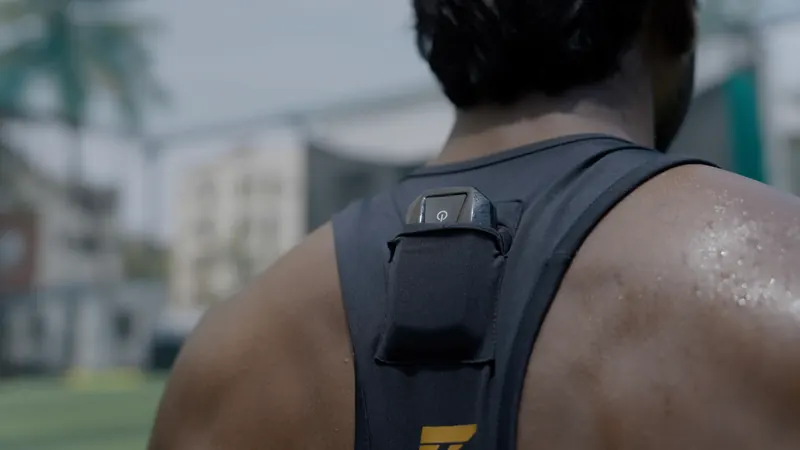
In the EvoQuest lab in Coimbatore, force plates measure single-leg jump and landing symmetry, which is useful for the bowler's brace leg, and timing gates split the 20 m sprint. GPS load tracking can show how much running a player did in a session, which helps manage workload alongside the power block.
Frequently asked questions
How can cricketers improve explosive power?
Build strength in the legs and hips, then add jumps, bounds, medicine ball throws and short sprints. Match drills to your role: single-leg bounds for bowlers, rotational throws for batters and fielding throws for fielders.
What exercises help a fast bowler gain power?
Single-leg bounds, trap-bar jumps, overhead and rotational medicine ball throws and kettlebell swings fit well. Add strength lifts for the legs and trunk. Keep the total weekly workload steady to avoid spikes.
Does power training help batters hit sixes?
It can help by improving the speed of hip and trunk rotation and the strength of the legs. Technique, timing and bat speed still decide most of the distance. Use rotational throws and jumps as support for batting practice.
Is it safe for young cricketers to do plyometrics?
Yes, when the work is supervised and the volume is low. NSCA youth guidance supports well-coached power training. Teenagers who bowl a lot should avoid adding too much new load at once and should report any back pain.
How often should cricketers train for power?
Many players do one to two power sessions a week away from bowling-heavy days. The right amount depends on match schedule and workload. Cut it back during tournaments and rebuild in the off-season.
This article is general education. Train within your current ability and get coaching if you are unsure about technique.
References
- Injuries in cricket Sports Health, 2017 (Pardiwala, Rao, Varshney)
- Spikes in acute workload are associated with increased injury risk in elite cricket fast bowlers British Journal of Sports Medicine, Hulin et al., 2014
- Training principles for power (Haff and Nimphius, 2012) Strength and Conditioning Journal
- Youth resistance training: updated position statement paper from the National Strength and Conditioning Association Journal of Strength and Conditioning Research, 2009
Cibiraj studied Exercise and Sports Science at Deakin University in Australia and worked as a strength and conditioning coach for cricket and football clubs in Melbourne before founding EvoQuest in Coimbatore. He runs the performance assessments and writes every diagnostics report, so the person who measures you is the one who explains the numbers.