
Hip flexor mobility exercises: Athlete Guide
Hip flexor mobility improves fastest with a few well-chosen drills done often and done well. Start with the simpler drills below, keep each set short and high quality, and test yourself every few weeks so you know the work is paying off.
 Cibiraj Sathishkumar · Accredited Exercise and Sports Scientist, Founder of EvoQuest
Updated · 3 min read
Key takeaways
- Hip flexor mobility improves fastest with a few well-chosen drills done often and done well.
- Cue: Tuck the tailbone
- Cue: Squeeze the back glute
- Most common mistake: Arching the lower back
On this page
Hip flexor mobility drills
- Half-kneeling stretch: Kneel in a lunge, tuck the pelvis and hold 30 seconds.
- Couch stretch: Place the back foot up on a sofa, tuck the pelvis and hold gently.
- Supine hip flexor stretch: Lie at the edge of a bed with one leg hanging off and the other knee hugged.
- Standing lunge reach: Step into a lunge and reach overhead on the back-leg side.
- Active lift-off: From the half-kneeling stretch, lift the front foot slightly to train control.
- Glute bridge hold: Lift into a bridge to train hip extension with the hip flexors lengthened.
What good technique looks like
- Tuck the tailbone
- Squeeze the back glute
- Ribs down
- Small forward shift
How to test it
Thomas test: Sit at the edge of a firm bench, lie back while hugging one knee to the chest, and let the other leg hang. Note whether the hanging thigh stays level with the bench and the knee angle.
A thigh that stays at or below bench level suggests good range; compare sides and note any drift upward, which suggests tightness.
Technique, step by step
- 1
Step 1
Kneel in a lunge with the back knee on a pad.
- 2
Step 2
Tuck the pelvis under and squeeze the back glute.
- 3
Step 3
Keep the ribs down and the torso upright.
- 4
Step 4
Shift the hips slightly forward.
- 5
Step 5
Hold for 30 seconds.
- 6
Step 6
Switch sides.
Common mistakes
| Mistake | Why it matters | Fix |
|---|---|---|
| Arching the lower back | The stretch moves from the hip to the spine and loses effect. | Tuck the pelvis and keep the ribs down. |
| Leaning too far forward | The front hip loses the stretch when the torso folds. | Stay tall through the trunk. |
| Lunging deep without a pelvic tuck | The hip flexor stays slack while the knee and back take the load. | Squeeze the back glute first, then shift forward. |
| Bouncing in the stretch | The muscle guards against fast movement. | Hold still and breathe. |
| Pushing through pain at the front of the hip | A pinch can mean a joint issue rather than a muscle stretch. | Stay within a gentle stretch and see a physio for a pinch. |
How much and how often
| Goal | Sets, reps or time |
|---|---|
| Beginner | 2 holds of 20-30 seconds per side |
| Athlete | 3 holds of 30 seconds per side, most days |
| Strength or power focus | Add strength work such as lunges and leg raises |
Short, regular sessions help. Do them after training or on rest days, and pair with glute strengthening.
Where it shows up in sport
- Sprinting: Hip extension range matters for stride length.
- Cricket: Fast bowlers repeatedly extend the back hip in delivery.
- Football: Kicking needs hip range behind the body.
- Cycling: Long hours seated shorten the hip flexors and limit extension.
Safety
Stop if you feel a pinch in the front of the hip or sharp pain. People with hip injuries should check with a doctor or physio.
How EvoQuest measures it
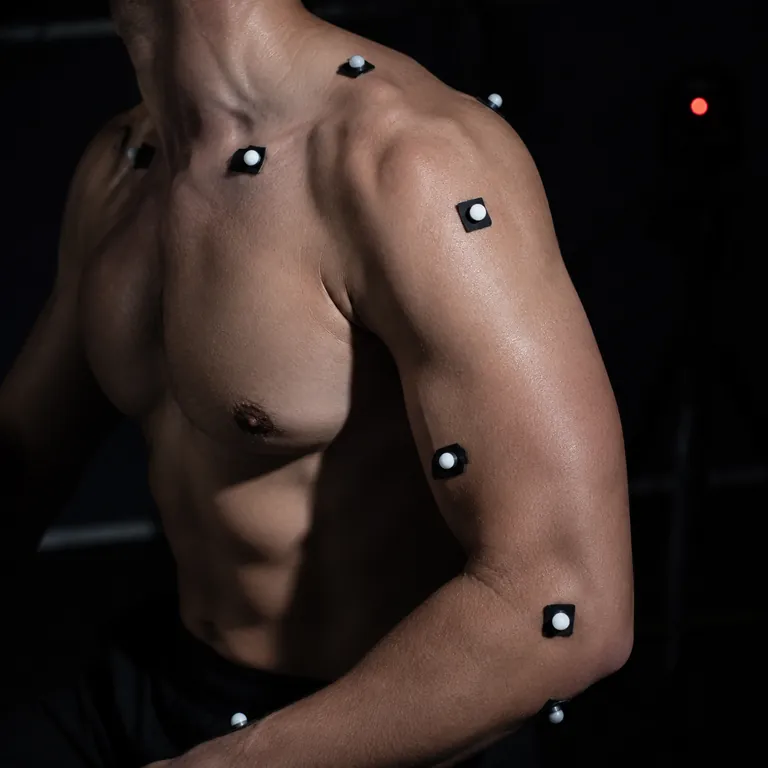
EvoQuest can measure hip extension range using the Thomas test and motion analysis, then compare sides.
In the assessment we film and measure this movement, compare left and right sides, and turn the result into the next block of training.
Frequently asked questions
What is hip flexor mobility?
It is the ability of the muscles at the front of the hip to lengthen so the thigh can move behind the body. It matters for sprinting, kicking and standing posture, and it can limit stride length when restricted.
How do I stretch my hip flexors properly?
Use the half-kneeling position, tuck the pelvis, squeeze the back glute and shift forward slightly. Avoid arching the lower back, since that moves the stretch away from the hip.
Why are my hip flexors tight?
Long periods of sitting, heavy sprinting or weak glutes can contribute. The feeling of tightness can also come from the back or hip joint. If pain is present, see a doctor or physio.
How long should I hold a hip flexor stretch?
About 30 seconds per side, repeated two to three times. Do it several days a week, ideally after training or on rest days, and add glute strengthening so the new range is useful.
This article is general education, not medical advice. If you have pain, a recent injury or a medical condition, see a doctor or physiotherapist before training.
Cibiraj studied Exercise and Sports Science at Deakin University in Australia and worked as a strength and conditioning coach for cricket and football clubs in Melbourne before founding EvoQuest in Coimbatore. He runs the performance assessments and writes every diagnostics report, so the person who measures you is the one who explains the numbers.