
Common chin-up mistakes
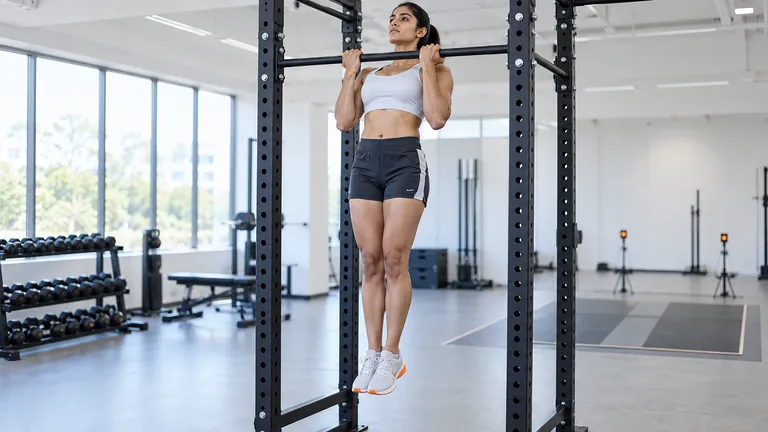
The most common chin-up mistakes are kipping or swinging, half reps, shrugging at the top. Most come from rushing the set-up or adding load or reps before the pattern is solid. Each one below has a simple fix you can test in your next session.
 Cibiraj Sathishkumar · Accredited Exercise and Sports Scientist, Founder of EvoQuest
Updated · 3 min read
Key takeaways
- The most common chin-up mistakes are kipping or swinging, half reps, shrugging at the top.
- Cue: Elbows to the ribs
- Cue: Chest to the bar
- Most common mistake: Kipping or swinging
On this page
Chin-up mistakes, why they happen and how to fix them
1. Kipping or swinging
Momentum does the work and the back gets less training.
Fix: Squeeze the glutes and keep the legs still.
2. Half reps
Skipping the bottom half cuts the lats out of the hardest range.
Fix: Start each rep from a full dead hang.
3. Shrugging at the top
The shoulders ride up around the ears and the neck tightens.
Fix: Pull the shoulders down and away from the ears.
4. Craning the neck over the bar
Reaching with the chin strains the neck and does not train the back more.
Fix: Pull the chest toward the bar instead.
5. Dropping fast on the way down
The lowering phase builds strength, and a drop wastes it.
Fix: Lower for 2 to 3 seconds to a full hang.
Quick reference table
| Mistake | Why it matters | Fix |
|---|---|---|
| Kipping or swinging | Momentum does the work and the back gets less training. | Squeeze the glutes and keep the legs still. |
| Half reps | Skipping the bottom half cuts the lats out of the hardest range. | Start each rep from a full dead hang. |
| Shrugging at the top | The shoulders ride up around the ears and the neck tightens. | Pull the shoulders down and away from the ears. |
| Craning the neck over the bar | Reaching with the chin strains the neck and does not train the back more. | Pull the chest toward the bar instead. |
| Dropping fast on the way down | The lowering phase builds strength, and a drop wastes it. | Lower for 2 to 3 seconds to a full hang. |
Cues to keep your form honest
- Elbows to the ribs
- Chest to the bar
- Lower slowly
- No swinging
Breathe in at the bottom and breathe out as you pull up.
When to step back to an easier version
If you cannot fix a mistake within two or three sets, use an easier version for a few weeks and rebuild the pattern.
- Band-assisted chin-up
- Negative chin-up
- Inverted row
Technique checklist
- Start in a hang with the shoulders pulled down.
- Brace the trunk and squeeze the glutes.
- Pull the elbows down and back toward the ribs.
- Raise the chin above the bar.
- Pause for a moment.
- Lower slowly to full arm extension.
Pain is not a technique flaw
Stop if you feel shoulder or elbow pain. People with shoulder injuries should be cleared by a doctor or physio. Youth athletes can use assisted or negative versions under supervision.
How EvoQuest measures it
EvoQuest can test pulling strength and track bar speed in weighted versions. Dynamometers can compare upper body strength between sides.
In the assessment we film and measure this movement, compare left and right sides, and turn the result into the next block of training.
Frequently asked questions
What is the difference between a chin-up and a pull-up?
A chin-up uses an underhand grip and involves the biceps more. A pull-up uses an overhand grip and shifts more work to the back. Both train the lats, and most athletes use both across a training year.
How many chin-ups should I be able to do?
There is no fixed target for every athlete. Many aim for 5 to 10 clean reps from a full hang, then add weight. Track your own progress and compare only like for like, with the same range and no swinging.
How can I do my first chin-up?
Use bands, slow negatives, inverted rows and hangs, and train two or three times a week. Add a rep or a few seconds each week. Most people get their first rep within a few weeks of consistent work.
Are chin-ups bad for elbows?
They can irritate the elbows if volume jumps quickly or form is poor. Build up gradually, use a full range, and see a doctor or physio if elbow pain lingers after training.
This article is general education, not medical advice. If you have pain, a recent injury or a medical condition, see a doctor or physiotherapist before training.
Cibiraj studied Exercise and Sports Science at Deakin University in Australia and worked as a strength and conditioning coach for cricket and football clubs in Melbourne before founding EvoQuest in Coimbatore. He runs the performance assessments and writes every diagnostics report, so the person who measures you is the one who explains the numbers.