
Badminton fitness training for 16 year olds: build strength while growth settles
At 16, many players are post-PHV or finishing their growth spurt, so progressive strength training becomes the priority. Badminton fitness at this age builds loaded lunges and single-leg strength, landing control, shoulder resilience and explosive first steps, while keeping an eye on sleep and school pressure.
 Cibiraj Sathishkumar · Accredited Exercise and Sports Scientist, Founder of EvoQuest
Updated · 4 min read
Key takeaways
- Many 16 year olds are post-PHV and can progress to coached, loaded strength training.
- Single-leg strength and lunge capacity matter because most badminton shots finish in a lunge.
- Shoulder and trunk work protects the smashing arm as hours of play rise.
- Sudden jumps in training volume, often around tournaments, are a main injury trigger.
- Board-exam years need a lighter plan with protected sleep.
On this page
Where 16 sits in development
Boys of 16 are often at or just after peak height velocity, and girls are usually well beyond it. This matters because maturity, not age, decides what a player can handle. A coach who tracks height every few months can see whether a player is still growing quickly. During rapid growth, joints and tendons can complain more, so loads rise gradually.
Compared with 15, the 16 year old can usually move from technique-first bodyweight work to progressively loaded sets under supervision. The NSCA long-term development model and the 2014 youth consensus support this when technique is sound.
Strength priorities for the court
Badminton involves hundreds of lunges, quick starts and overhead strokes in a match. Strength work should serve those actions.
- Lower body: goblet squat, split squat, reverse lunge, Romanian deadlift pattern, 3 sets of 6 to 10 with a load that leaves 2 to 3 reps in reserve.
- Calf and ankle: slow calf raises, single-leg balance, because the calf and Achilles absorb repeated push-offs.
- Upper body: rows, push-ups, band external rotations for the shoulder.
- Trunk: side planks, pallof press, dead bug to protect the lower back during rotation.
The badminton strength and conditioning post explains the wider logic, and the exercises here can be built around a simple full-body session.
Speed, power and landing
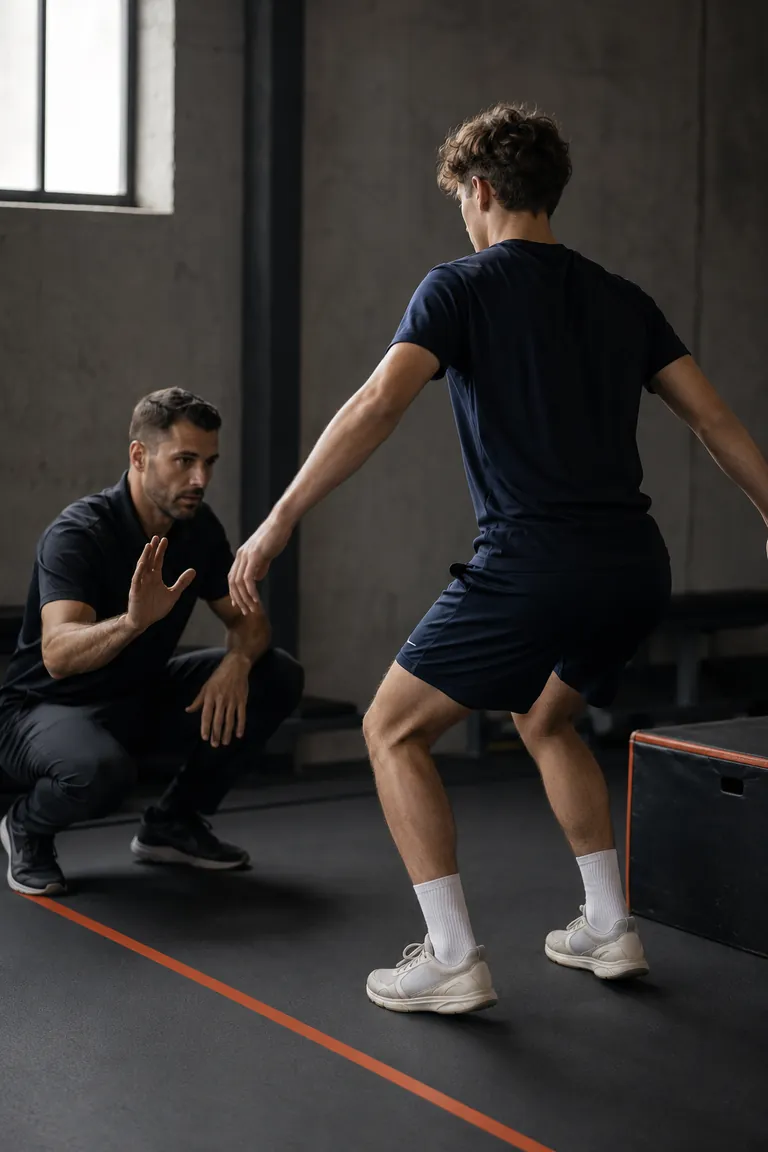
Once a player squats and lunges well, add jumping and fast-footed drills. Start with box jumps with a soft landing, skater hops and lateral bounds, then short multi-directional starts from a split step. Keep contacts low and quality high; stop when landing gets sloppy. Our badminton plyometric exercises guide lists suitable drills.
Sample week for a 16 year old
A generic week for an academy player balancing school. Adjust around tests and tournaments.
If a Class 10 board exam is near, trim volume but keep one short strength session so gains are not lost.
Common injuries at 16
Reviews of badminton injuries in youth and adult players describe lower limb problems, including ankle sprains, knee pain and Achilles issues, and shoulder complaints in overhead play. Many relate to workload spikes. Warm up for 10 to 15 minutes before every session, include calf and hip strength, and increase weekly hours by small steps. Persistent pain should be checked by a doctor or physio.
Exams, tournaments and recovery in India
Class 10 and Class 11 bring tuition, early starts and late homework. Fitness gains depend on sleep, protein-containing meals and regular fluids, and a heavy week of study can lower tolerance for training. Plan a lighter week before exams, and use state or district tournaments as the peak. Indoor hall heat in Coimbatore summers can be significant, so stay hydrated and cool down well.
Warm-up and cool-down habits at 16
A 16 year old plays longer, harder sessions, so the warm-up carries more weight than it did at 12. Spend 10 minutes raising heart rate with skipping and shuffles, 3 to 4 minutes on hip and ankle mobility, then finish with split-step jumps and a few fast lunges before touching a shuttle. After play, a short walk and calf and hip flexor stretches help. Warm-ups that include balance and landing work have been linked to fewer injuries in young athletes, and they cost only a few minutes.
Players who skip warm-ups before late-evening batches are the ones who tend to complain of calf tightness and knee soreness by the next morning.
What EvoQuest can measure at 16
A youth assessment at EvoQuest can measure jump height and landing forces on force plates, left-right differences in single-leg tasks, short sprint timing and strength through simple dynamometry or bar velocity. Staff also review movement quality in a lunge. The results help a coach see where a growing player is strong or lagging.
Start with a free 20-minute call using the call page.
Frequently asked questions
What is the best fitness training for a 16 year old badminton player?
A mix of progressive strength for the legs and trunk, plyometrics with clean landings, shoulder care and conditioning built from court drills. Add load slowly, supervise technique, and protect sleep during school exams.
Can a 16 year old lift weights for badminton?
Yes, with coaching. The NSCA and the 2014 international consensus support supervised resistance training for adolescents. Start with technique and moderate loads, then progress gradually as form stays solid.
How do I avoid injury when playing more at 16?
Raise weekly playing time slowly, warm up well, build single-leg and calf strength, and rest after tournaments. Spikes in hours are a common reason for shin, knee or Achilles pain. See a doctor or physio for lingering pain.
Does growth stage matter at 16?
Yes. Players still in a fast growth spurt may have tight, sore tendons and clumsy coordination. Reduce jumping volume when pain appears, and let load follow how the body feels rather than age alone.
How should I balance board-exam stress with badminton training?
Keep short, focused sessions, protect eight or more hours of sleep, and drop optional extras before dropping rest. A reduced plan during exam weeks keeps strength without adding fatigue.
This article is general education. Train within your current ability and get coaching if you are unsure about technique.
References
- National Strength and Conditioning Association position statement on long-term athletic development (Lloyd et al., 2016) Journal of Strength and Conditioning Research
- Position statement on youth resistance training: the 2014 International Consensus (Lloyd et al.) British Journal of Sports Medicine
- Injury epidemiology, patterns, and risk factors in youth and adolescent badminton players: a scoping review (Dhawale et al., 2026) Frontiers in Sports and Active Living
- Systematic review on badminton injuries: incidence, characteristics and risk factors BMJ Open Sport & Exercise Medicine, 2025
Cibiraj studied Exercise and Sports Science at Deakin University in Australia and worked as a strength and conditioning coach for cricket and football clubs in Melbourne before founding EvoQuest in Coimbatore. He runs the performance assessments and writes every diagnostics report, so the person who measures you is the one who explains the numbers.