
Acute chronic workload ratio explained: what it is and how to use it
The acute chronic workload ratio (ACWR) divides an athlete's recent training load, usually the last seven days, by their average load over the last four weeks. It is meant to show whether load has risen too fast. Some studies link spikes to injury, but critics say the ratio is a poor predictor.
 Cibiraj Sathishkumar · Accredited Exercise and Sports Scientist, Founder of EvoQuest
Updated · 4 min read
Key takeaways
- ACWR compares last week's load with the average of the past four weeks.
- A fast rise in load has been linked to injury in studies of elite cricket fast bowlers.
- Gabbett argued that well-built chronic load protects and that underloading carries risk too.
- Critics argue the ratio itself is flawed and should not be treated as an injury predictor.
- Use it as one load check beside wellness, soreness and performance data.
On this page
What ACWR measures
The acute chronic workload ratio compares two numbers. The acute load is what an athlete did recently, usually the last seven days. The chronic load is the rolling average of the past four weeks, which stands for the load the body is used to.
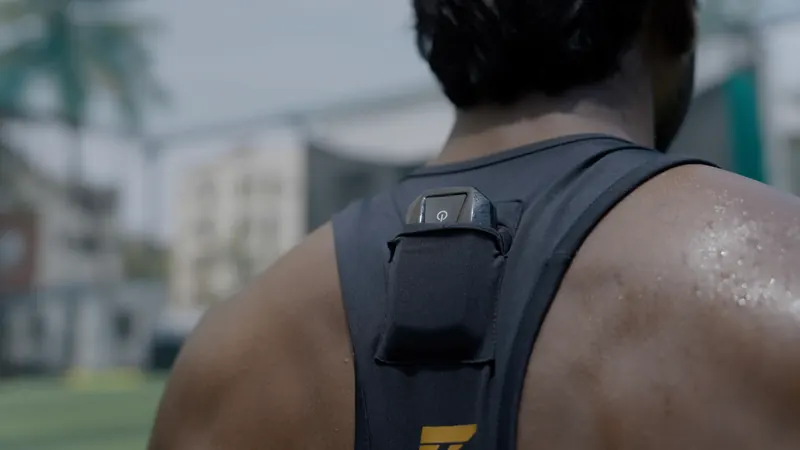
If the acute load is far above the chronic load, the athlete has done much more than the body is used to. The idea is that a sudden jump is more dangerous than a high load that built up slowly. Load can be measured in many ways, such as GPS distance, session rating of perceived exertion times minutes, or bowling deliveries. See our post on GPS load monitoring in sport.
How to calculate it
The calculation is simple, which is part of why it spread.
- Pick one load measure and record it every session.
- Add up the last seven days. That is the acute load.
- Take the average weekly load across the last four weeks. That is the chronic load.
- Divide acute by chronic.
A ratio near 1.0 means this week looks like the usual week. Above 1.0 means this week is heavier than usual, and below 1.0 means lighter. For example, if an athlete's weekly load averages 2,000 units over four weeks and this week is 3,000, the ratio is 1.5.
What the research found
Hulin and colleagues studied elite cricket fast bowlers in the British Journal of Sports Medicine in 2014 and reported that spikes in acute workload were associated with higher injury risk. This work helped popularise the ratio. Our guide to cricket fast bowler workload management covers the bowling side.
Gabbett's 2016 paper, "The training-injury prevention paradox", added that athletes with a high chronic load often handle spikes better, and that harder training can be protective when it is built up gradually. The International Olympic Committee consensus on load in sport also makes the point that load and injury are linked in both directions.
The criticism
The ratio has strong critics. Impellizzeri and colleagues argued in Sports Medicine in 2021 that the ratio's apparent link with injury partly comes from how it is built mathematically, and they concluded it should be dismissed as a framework. An earlier paper in the International Journal of Sports Physiology and Performance by the same group questioned whether the ratio is a reliable measure at all.
The disagreement is not settled. What both sides accept is that sudden big increases in training load deserve attention. They differ on whether one ratio and one cut-off can predict injury for an individual athlete.
How coaches use load data safely
A 2016 review in the British Journal of Sports Medicine by Saw and colleagues found that subjective self-reports, such as how tired or sore an athlete feels, tracked training response better than many objective measures. That supports pairing load numbers with simple daily questions. Our athlete monitoring guide explains the full approach.
Limits to keep in mind
The ratio needs consistent data. If sessions are missed or the load measure changes, the number becomes unreliable. Different load measures give different ratios, and four-week windows are a convention, not a law of nature.
It also says nothing about why load rose. A heavy week during a tournament and a heavy week from a poor plan look identical to the formula. Coach judgement fills that gap.
ACWR at EvoQuest
EvoQuest in Ramanathapuram, Coimbatore, uses GPS load and heart rate in its lab assessment, so a coach can see how much work an athlete actually does and how the body responded. See the performance diagnostics page.
For team or academy load monitoring, book a free 20-minute call on the call page.
Frequently asked questions
What is the acute chronic workload ratio?
It is the ratio of an athlete's recent training load, usually seven days, to their average load over four weeks. A high ratio means load has risen quickly. It is used to flag sudden increases that the body may not be ready for.
What is a good ACWR?
There is no agreed safe number. Early studies pointed to ratios around 0.8 to 1.3 as lower risk, but later critics questioned fixed cut-offs. Treat it as a prompt to look closer, not a pass or fail score.
Does ACWR predict injuries?
Evidence is mixed. Some studies, such as one in elite cricket fast bowlers, linked workload spikes to injury. Other researchers argue the ratio is a flawed statistic with little predictive power. Use it with other information.
What load measure should I use for ACWR?
Use one measure that fits the sport and track it consistently. Options include GPS distance, session rating of perceived exertion multiplied by minutes, and bowling or throwing counts. Changing the measure partway through breaks the comparison.
Can underloading cause problems too?
Yes. Gabbett's 2016 paper argued that low chronic load leaves athletes less prepared for spikes. Steady, gradual build-up of training is generally safer than long breaks followed by sudden hard weeks.
This article is general education. Train within your current ability and get coaching if you are unsure about technique.
References
- Spikes in acute workload are associated with increased injury risk in elite cricket fast bowlers (Hulin et al., 2014) British Journal of Sports Medicine
- The training-injury prevention paradox: should athletes be training smarter and harder? (Gabbett, 2016) British Journal of Sports Medicine
- What role do chronic workloads play in the acute to chronic workload ratio? (Impellizzeri et al., 2021) Sports Medicine
- Monitoring the athlete training response: subjective self-reported measures trump commonly used objective measures, a systematic review (Saw et al., 2016) British Journal of Sports Medicine
Cibiraj studied Exercise and Sports Science at Deakin University in Australia and worked as a strength and conditioning coach for cricket and football clubs in Melbourne before founding EvoQuest in Coimbatore. He runs the performance assessments and writes every diagnostics report, so the person who measures you is the one who explains the numbers.